
WeChat: (+86)13978873330 Email: 381784025@qq.com

WeChat: (+86)13978873330 Email: 381784025@qq.com

Everyone says "wear plain colours, don't dress revealingly", but on a columbarium floor what actually works are three lines you can measure: heel height tread depth and how far the hem sits above the ground This breaks dress into items you can act on.
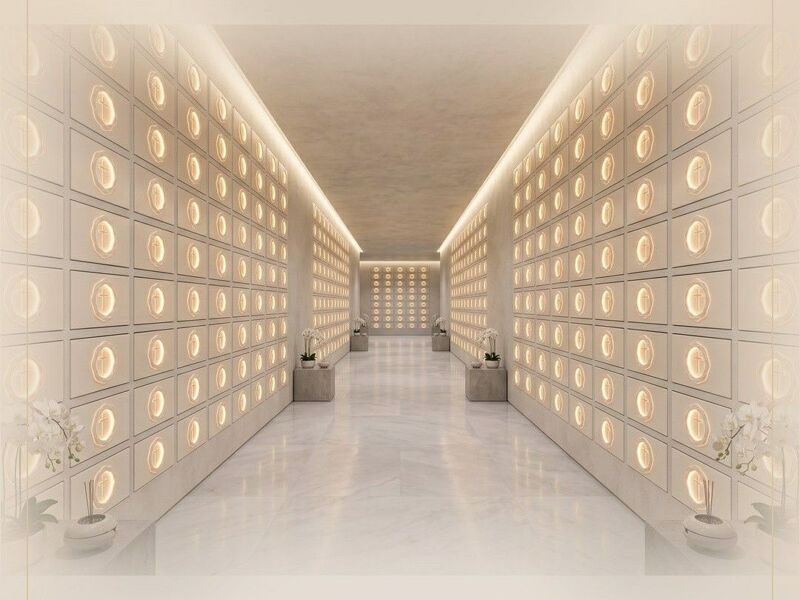
The clothing problem in a columbarium comes down to three physical conditions: a slippery floor, the need to bend, and a large indoor-outdoor temperature difference.
The corresponding lines: heels no higher than 30 mm, tread at least 3 mm deep, hem or trouser cuff not touching the floor. Get those three right and colour and style are secondary.
At a columbarium the commonest accident is not a lapse in propriety. It is a slip. And eight times out of ten, the person who slips is wearing flat shoes with the tread worn smooth.
Columbarium floors are mostly polished stone or homogeneous tile, with R10 as a dry-state rating. On a damp day (above 85% RH) the friction coefficient drops a grade, and with many people the floor carries water and becomes worse.
The problem with stiletto heels is not only slipping but sound Reverberation time is usually 1.2–1.8 seconds; a pair of hard-soled heels walking through is audible to the whole row.
Trainers are fine, but not the pair with the tread worn flat. Press a fingertip into the tread; if it does not give, do not wear them.
Visiting requires bending, crouching to set out offerings and kneeling. The standing area before a niche is 900 mm deep, and kneeling puts your knee 200 mm from the door panel.
A hem below the knee is so that crouching does not drag it across the floor — the floor has just been mopped, and the detergent in the mop water leaves marks on dark fabric.
The same for trouser cuffs Wide-leg trousers look good, but beyond 250 mm in width you will step on the cuff when you crouch.
In most columbarium usage, "plain" means low saturation: grey, beige, navy, brown. Pure black is not forbidden, but in some elders' eyes all-black is the dress of another funeral, and invites unnecessary associations.
Pure white also needs care. It flares under strong light and blows out in photographs and since columbarium walls are mostly pale, a figure in all white disappears into the wall.
High-saturation colours — bright red, vivid yellow — are avoided by most families That is not a rule but a matter of setting: a columbarium is a quiet place, and colour is the first thing that speaks.
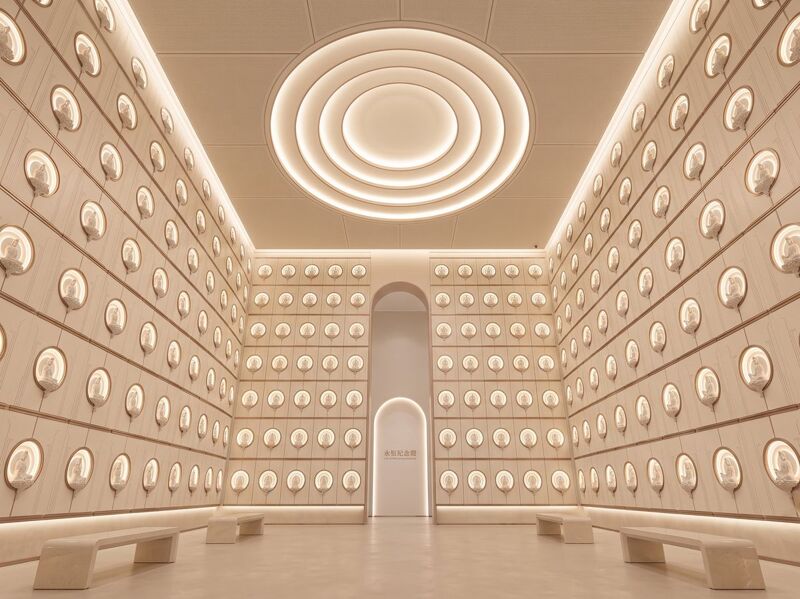
In summer it is 35 °C outside and 24–26 °C inside — nine to eleven degrees. In winter it reverses: 8 °C outside, 24 °C inside, sixteen degrees.
That difference decides one thing: wear an outer layer you can take off. A thin jacket or a scarf is more useful than a thick sweater. Over 60 minutes you will take it on and off once or twice; that is normal.
Elderly visitors especially. Air-conditioning outlets are mostly in the ceiling delivering sideways straight at the walkway; stand long enough and the back of the neck chills, and the concern is blood pressure more than cold.
For an elderly visitor, add a thin scarf. The cold air comes from above and to the side, straight at the walkway; a chilled neck is worse than cold hands and more likely to swing blood pressure. A scarf takes no space — put it on entering, take it off leaving.
For a child, add a jacket and closed-toe shoes. The walkway is 1.2 m, a child covers it in two strides, and open sandals slip on polished stone far more readily than adult shoes. Also avoid hoodies with drawstrings — a cord catching on a niche handle has actually happened.
The walkway is 1.2 m; two people passing must turn sideways. A backpack over 300 mm wide will brush someone's arm.
Bring one small handbag with phone, tissues and wet wipes. Larger bags can go in the lockers at the entrance — most halls have them within 5 m.
One more thing worth carrying: a pack of wet wipes. The lower edge of the door panel, the ledge, the rim of the burner — thirty seconds each, and more use than any ceremony.
Q: Must sleeves be long?
A: Not necessarily. Short sleeves are fine, but bring a thin jacket; 24 °C indoors is cool for an elderly person sitting or standing for long.
Q: Can jewellery be worn?
A: Yes. But rings and bangles catch on niche door panels when setting out offerings or wiping; better to take them off and put them in your bag.
Q: What should a child wear?
A: The same as an adult. The key is still footwear — children run, and tread matters more than style.
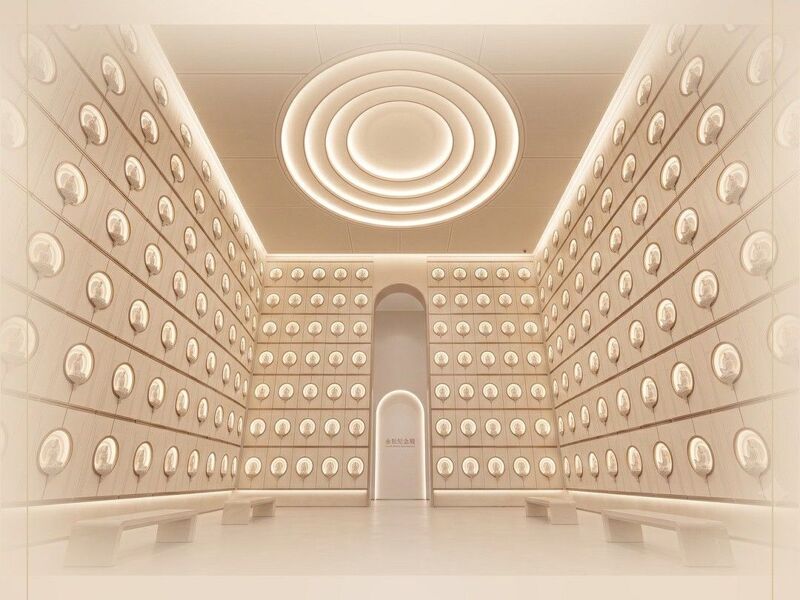
What to wear is not a question of plainness but of three numbers: heel under 30 mm, tread over 3 mm, hem and cuff off the floor. Add a removable outer layer for the 10 °C difference; keep the bag under 300 mm so you do not block a 1.2 m walkway. Choose low-saturation colours because a columbarium is already quiet — dressing right is so that you can bear to stay in it.






