WeChat: (+86)13978873330 Email: 381784025@qq.com

WeChat: (+86)13978873330 Email: 381784025@qq.com

Most families arrive with a single number in mind: "I plan to spend fifty thousand."
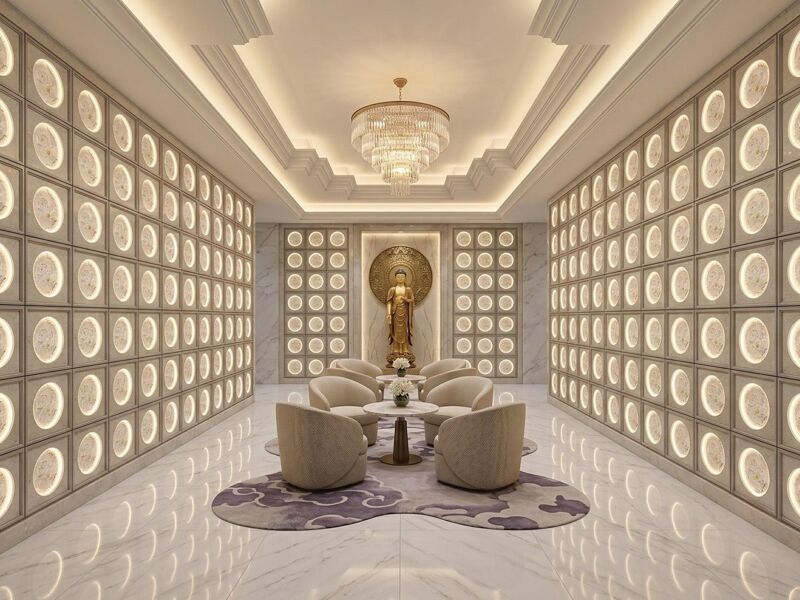
How that fifty thousand is split determines whether the next thirty years go smoothly. I have seen too many cases where everything was sunk into the niche price then the management fee became unaffordable and the tablet was the cheapest available.
Here is a workable allocation, then the reasoning.
Taking the total budget as 100 per cent:
- Niche (including door panel, lining, lock): 60 to 70 per cent - Management fee reserve (5 to 10 years prepaid): 10 to 15 per cent - Ancestral tablet: 8 to 12 per cent - Interment ceremony and rites: 5 to 8 per cent - Urn, sealing, engraving, sundries: 5 to 8 per cent
This is not a standard answer, but it guarantees one thing: you will not discover, after buying the niche, that there is a pile of further costs.
The management fee is the most overlooked item in the whole budget, and the only one that must be paid forever.
At common levels, a single niche runs 500 to 1,200 yuan a year Over twenty years that is ten to twenty-odd thousand. If all the money went into the niche price, a family may start feeling by year five that "this niche is a burden".
My advice: deposit five years of management fees at signing. Some facilities offer a prepayment discount; even without one it is worth it, because it converts a long-term pressure into a settled matter.
One caution: be careful about prepaying more than ten years. If the operator changes, prepaid money is the hardest thing to recover.
The tablet is the focal point of a visit. Families entering a hall look for the tablet first, then the niche.
Cheap tablets have two problems: the lettering fades, and the material dislikes moisture With hall humidity held around 50 per cent, an untreated timber tablet will warp within three to five years.
I recommend no less than 8 per cent of the total on the tablet. At that level the material and workmanship will last twenty years.
This is the most elastic item, from a few thousand to tens of thousands.
The test is: does the family have an established practice? If yes, follow it. If not, a basic package is enough — the placement rite on the day of interment plus one chanting session.
Two things I would not advise: adding multiple assemblies for the sake of appearances, and buying a "package ceremony" on a salesperson's recommendation. Money spent on those is very hard to evaluate.
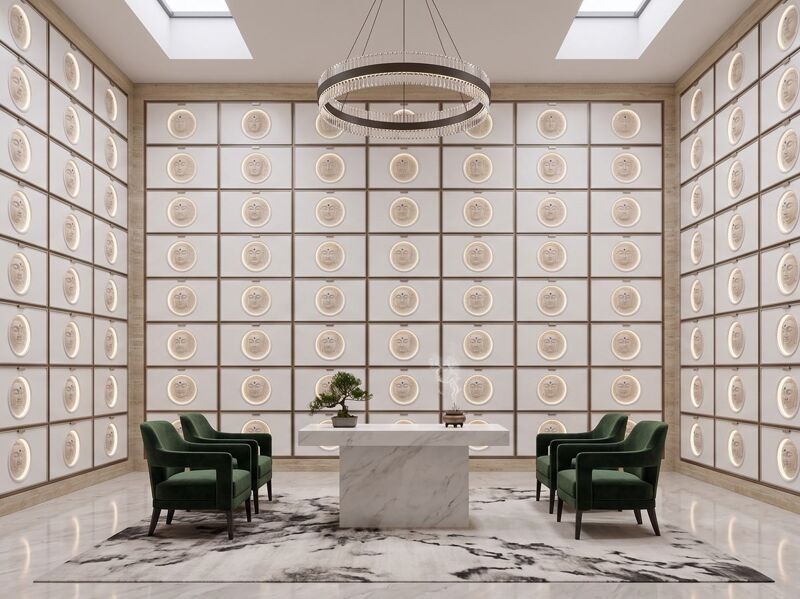
Urn prices span an enormous range, from a few hundred to tens of thousands. My advice: choose by internal chamber size, not by price.
An urn 200 mm in diameter and 250 mm tall already meets the placement requirements of most niches. The problem with expensive urns is not the price but the size: some stone urns exceed 260 mm in diameter and will not fit a standard niche.
Sundries include sealing material, engraving certificate issuance and opening service fees. Together they usually stay under 3 per cent of the budget, but establish them in advance so you are not caught on site.
The first: niche price first. Over 70 per cent into the niche choosing the best position.
Advantage: position is the one element that cannot be replaced. Disadvantage: fees and tablet get squeezed, and the long-term experience suffers.
The second: balanced. Following the framework above.
Advantage: no weak link. Disadvantage: the niche price is unremarkable.
The third: cheap niche, expensive specification. Niche price down to 50 per cent, money into door panels, lining strip lighting.
This is the one I advise against most. A niche's door panel can be replaced and lighting added; its position cannot be changed. Spending on the replaceable parts means the budget is aimed at the wrong target.
Three options, in priority order.
First, drop the position, not the fee. Moving from a middle tier to a second-best tier often saves 20 per cent, with no effect on management fees.
Second, reduce the count, not the specification. Buy a double rather than a six-cell family niche, and concentrate the budget on two or three niches.
Third, defer the tablet. A tablet can be added later; a niche cannot. But note that in many facilities the tablet area and niche area are sold separately, and a later addition may not have an adjacent position.
Q: Should the budget include a maintenance reserve?
Yes. Door panels, locks and seals all age. Set aside one or two hundred yuan a year.
Q: Can the management fee be negotiated?
Usually not, but you can push for a multi-year prepayment discount or a first-year waiver.
Q: Is it cheaper to buy the tablet together with the niche?
Bundles usually carry a discount, but price them separately to confirm the discount is real.
Q: Is thirty thousand enough?
In most cities thirty thousand buys a usable single niche, but the position will be in a second-tier zone. Keep the management fee outside that thirty thousand.
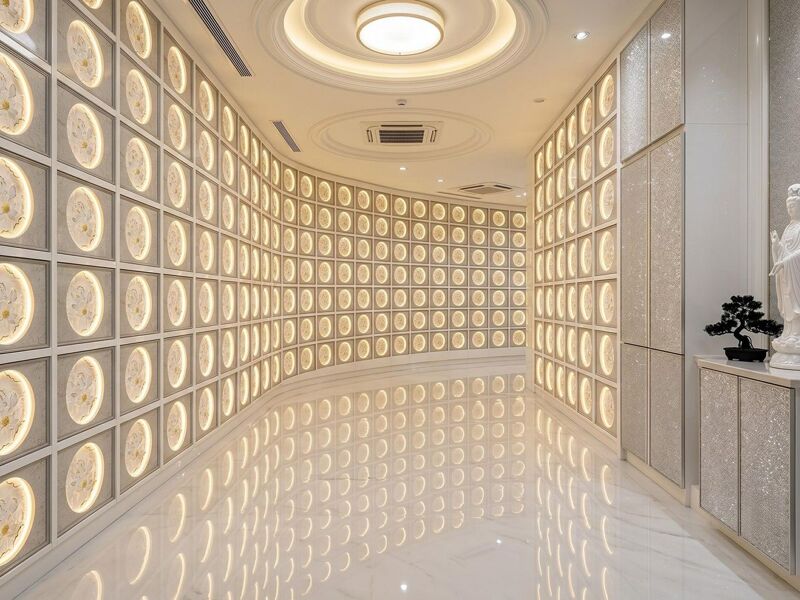
Splitting the budget is really about which money cannot be saved. Position cannot be saved, fees cannot be saved, the tablet cannot be saved. Door panels, strip lighting and decoration can come later. Sort those four and a fifty-thousand budget delivers fifty thousand of value — rather than buying a handsome niche and then worrying about the management fee for the next twenty years.