
WeChat: (+86)13978873330 Email: 381784025@qq.com

WeChat: (+86)13978873330 Email: 381784025@qq.com

Raise a phone and the family next to you will glance over. The line on photography in a columbarium is actually clear: photograph your own, not anyone else's, and no flash. This turns the three into actions.
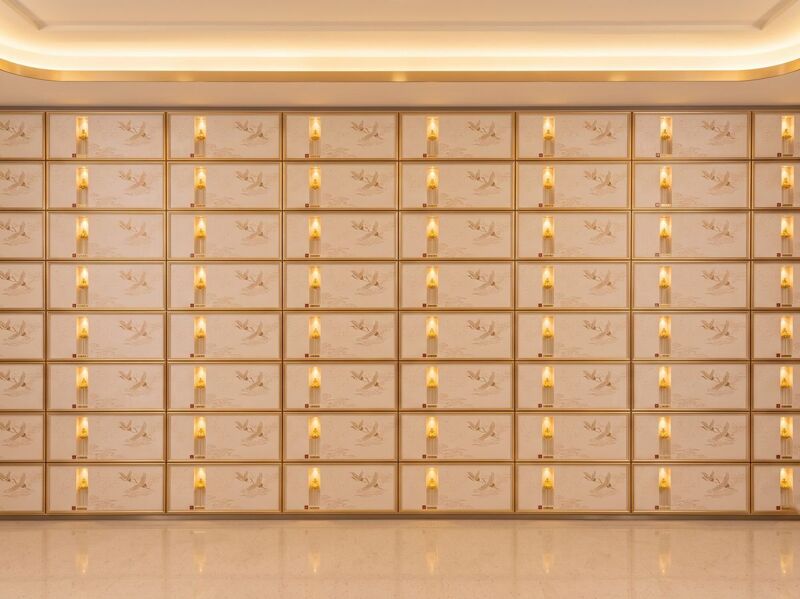
You may photograph: your own niche, your own tablet the family you came with, the building itself (in the lobby, in empty areas).
You may not photograph: other families' tablets and niches families in the middle of a rite the opening of a body or an urn, any close-up carrying someone else's name.
The line does not rest on hall rules but on one test: does this photograph contain something someone else does not want recorded? Niche door panels carry engraved names and one sweep of a wide lens pulls in a whole row of them.
Three reasons each harder than the last.
One, light disrupts the rite. Columbarium illuminance is typically 300–500 lux; one flash output raises that by tens of thousands. A family reciting beside you is interrupted.
Two, flash damages the finish. The lacquer on a niche door panel ages faster under strong UV and instant heat. Flash is about 5500 K with a little UV, and a single exposure is negligible — but a family that photographs and flashes year after year will show localised loss of gloss on the panel after five.
Three, reflection ruins the photograph. Panels are mostly semi-matte; a direct flash makes a white patch that lands exactly over the engraving.
The right method: flash off, rest the phone on a railing or ledge, use a shutter speed of 1/15 or slower, or simply use night mode There is enough light in a columbarium; it just comes from above.
Stand square in front, 800–1000 mm away, phone parallel to the panel. At that distance the 26 mm main camera captures the whole niche without distortion.
Do not shoot upward. It distorts the niches above and pulls the ceiling fittings into frame.
Do not stand too close. Under 500 mm the wide-angle edge stretches and the engraving distorts.
For a close-up of the engraving, wipe the panel first. The door gap is 2–3 mm, dust works out through it and settles on the lower edge, and in close-up it is very obvious.
Row spacing is usually 1.5 m and the walkway 1.2 m. Standing at your own niche, the neighbours are 600 mm to each side.
One landscape shot covers 1.8 m of width and both neighbouring panels will be in frame.
Two solutions: shoot portrait, which narrows the frame; or crop both sides afterwards and keep the middle.
There is a simpler one: ask first. If someone is beside you, a nod is more effective than an apology afterwards.
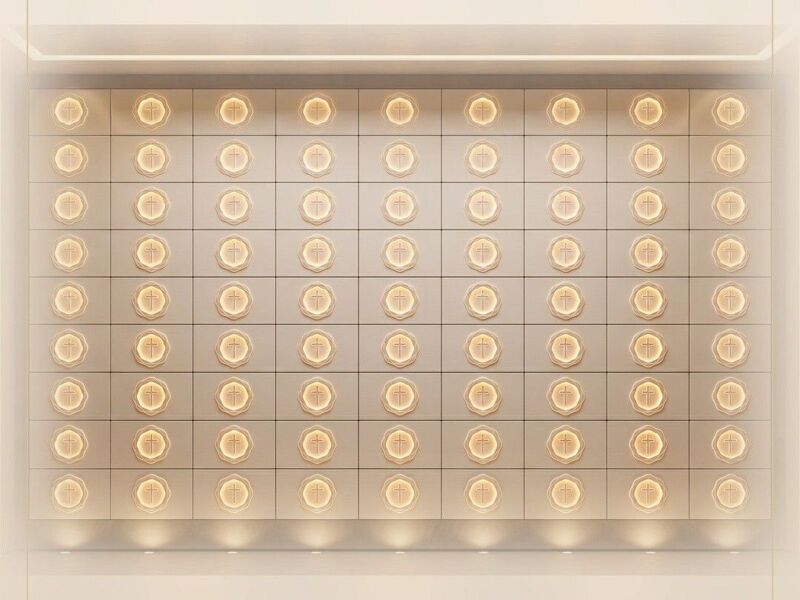
The reason is not conservatism but privacy. A livestream has hundreds of viewers, and the frame is full of other people's names and photographs.
Most halls' rules: no livestreaming, no commercial filming, no drones (not permitted indoors anyway). Personal commemorative photography is generally not banned, but must not disturb others.
To shoot footage for content, the correct route is to apply to the hall, sign a filming permit, and agree the area and the time slot Management usually does not refuse such applications, provided peaks and ceremonies are avoided.
Three occasions.
During a rite. Chanting dedication and sealing — raise a lens and the rite disperses. Shoot before or after.
When someone nearby is crying. No explanation needed. What needs protecting in a columbarium is not the image but the person.
When you cannot say why you are shooting. Many people save the photo and never open it again. Memory of a columbarium is not kept by photographs but by showing up each year.
Rarely mentioned, but practical.
Posting originals in a family group chat publishes the niche number the full name and the location. The safer practice: mask the number and the full name before sending, or send only a wide shot.
Automatic cloud backup carries location data. If you do not want the location recorded, switch off location in the camera settings before shooting.
Q: Can the urn be photographed?
A: The urn is inside the niche and cannot be photographed once sealed. It can be photographed during an opening for inspection, with the hall's consent and presence.
Q: What if a staff member stops me?
A: Stop first, then ask what rule applies. Most halls publish theirs on the entrance notice or in the terms of use; one look tells you where the line is.
Q: Can I bring a camera?
A: Yes, but a telephoto indoors more easily captures other people's areas and is therefore more likely to cross the line. A phone is enough.
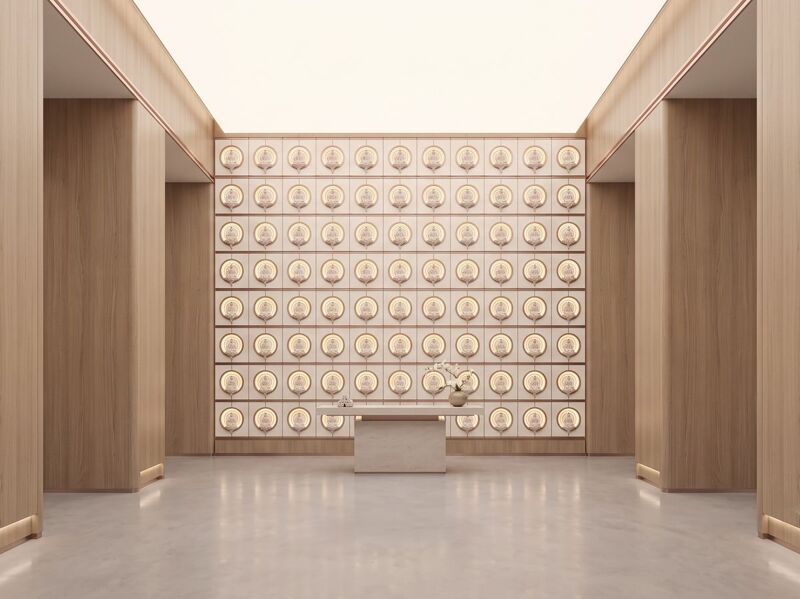
The answer is yes, but shoot with restraint: flash off, portrait orientation 800 mm away, crop both sides afterwards. Niche panels carry names, and a 30-degree turn of the lens is someone else's family. What you are keeping is not a rule but a sentence: leave out of the frame whatever someone else would not want photographed.






