WeChat: (+86)13978873330 Email: 381784025@qq.com

WeChat: (+86)13978873330 Email: 381784025@qq.com

A columbarium hall is quiet on ordinary days. So quiet that it is hard to imagine Qingming morning: queues at the door, blocked aisles, not enough offering tables.
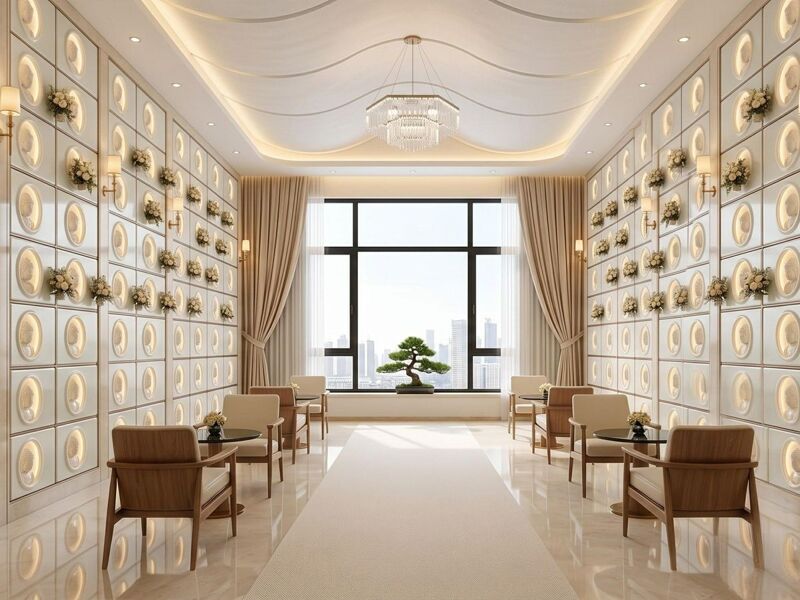
That is the "visitor peak". It heavily influences niche choice, yet almost every family views on an ordinary day.
Peak single-day attendance. Ask the facility directly. Compare it with the total niche count and you know how crowded it gets. If three thousand people come in a day and the aisle is 1.5 m wide, the peak will jam.
Peak periods. In most halls the peaks are Qingming morning from eight to eleven, New Year's Eve morning, and the Ghost Festival. Establish them, and avoid positions on the peak circulation route.
Niche-to-aisle ratio. Total niches divided by aisle area. The higher the figure, the more crowded the peak.
If they will not give numbers, use your eyes. Peaks leave marks.
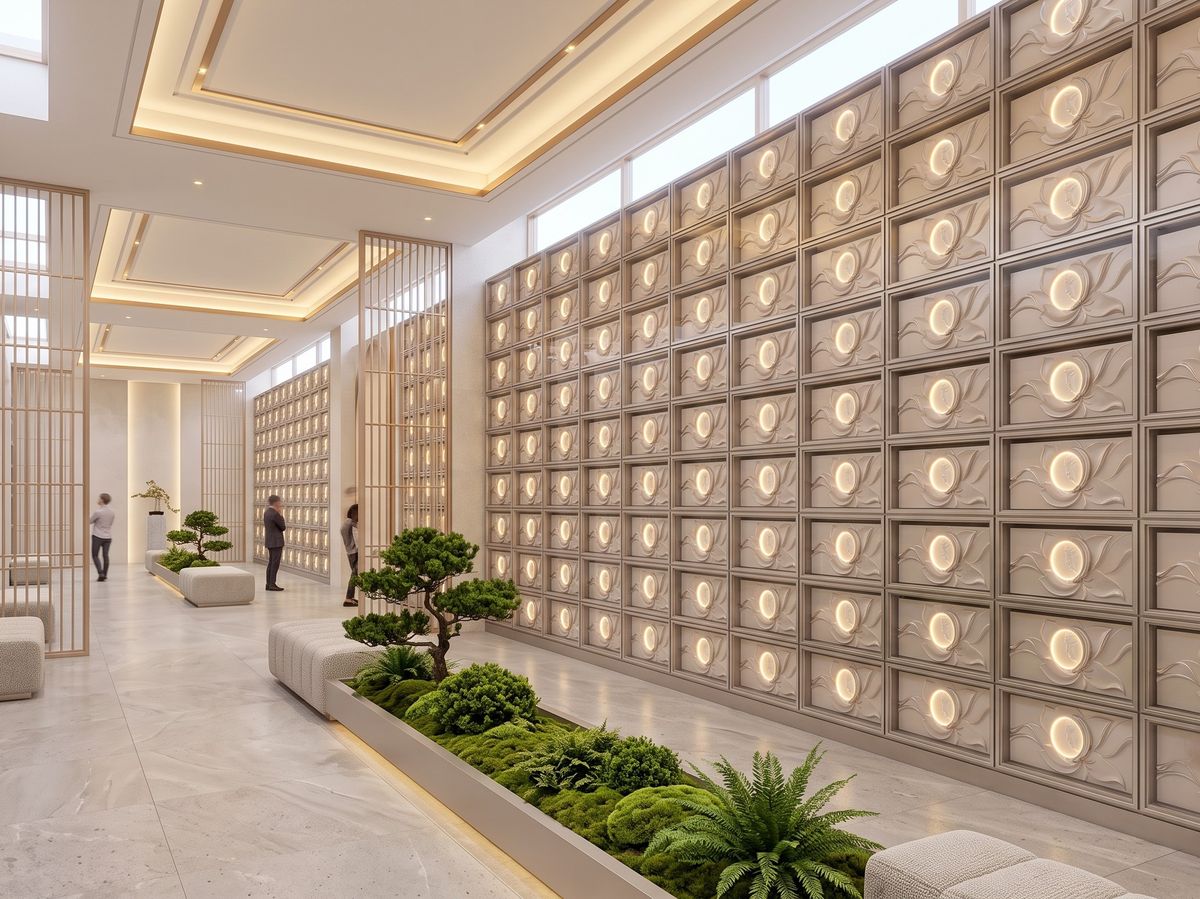
Wear bands on the floor. The centre of the main aisle takes on a darker, smoother band — that is footfall polishing it. The wider and more obvious the band, the more people come.
Chipped edges on offering tables. At peak, offerings are numerous and movements hurried, and table edges get nicked. See which tables are most damaged; those are the choke points.
Scratches on the lower edge of door panels. When crowds are thick, trolleys and bags graze the panels. Where scratches cluster is where traffic is densest.
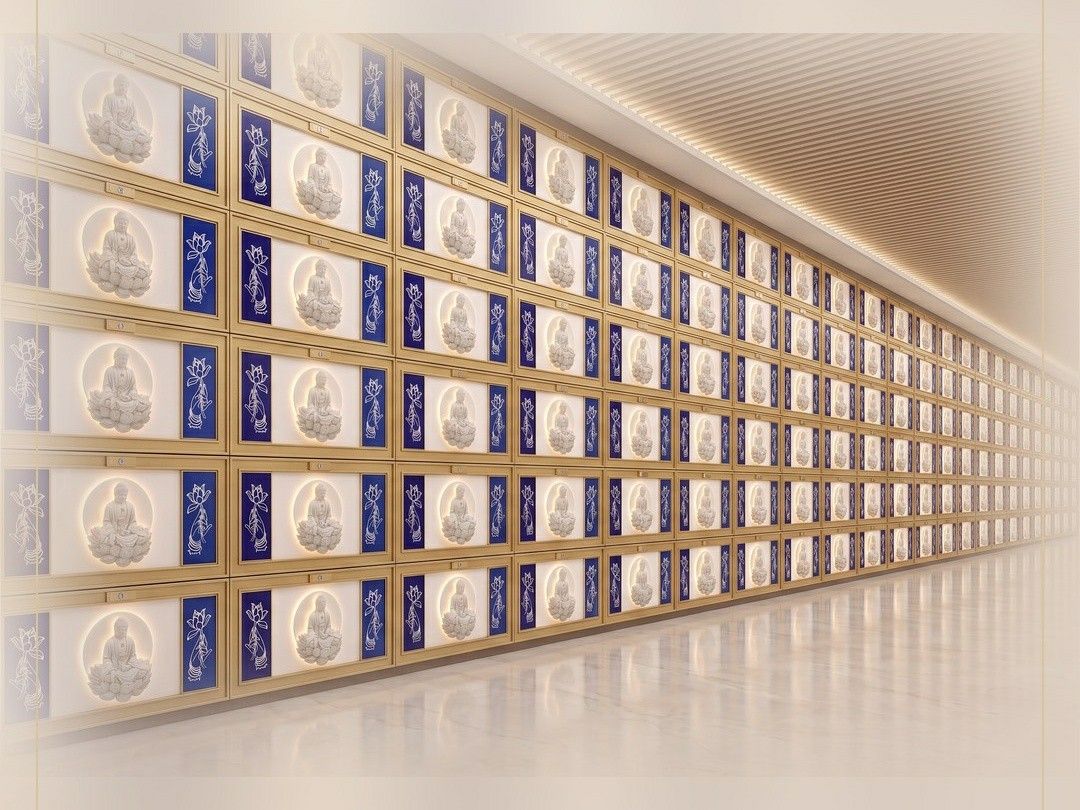
Wear on number plates. Plates repeatedly touched and pointed at lose the sharpness of their lettering. The most worn area is the one that is easiest to find and most often asked about.
The first row inside the entrance. Everyone passes it on the way in; the area in front is the most congested.
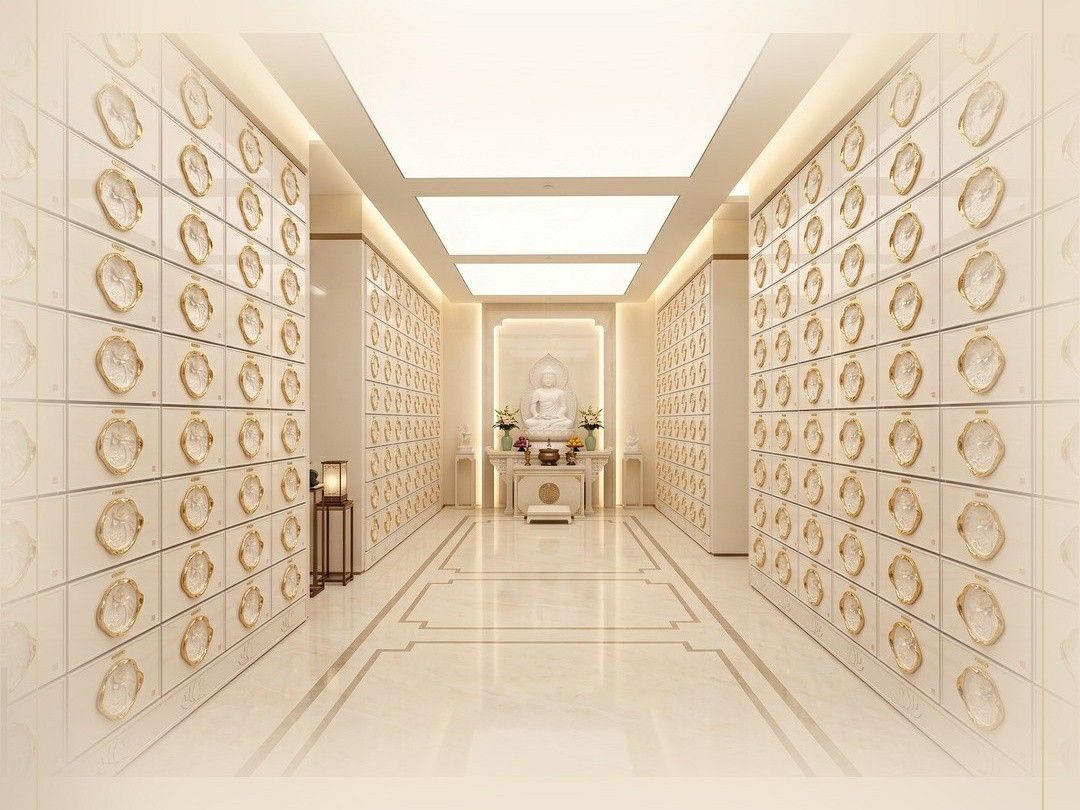
Directly in front of the Buddha. Prostration, photographs and group gatherings all happen here.
Corners of the main aisle. Sightlines are blocked at a corner, people naturally slow down, and a choke point forms.
If your family's visiting time concentrates at peak, avoid those three. Better to walk two extra steps than to squeeze through a crowd every time.
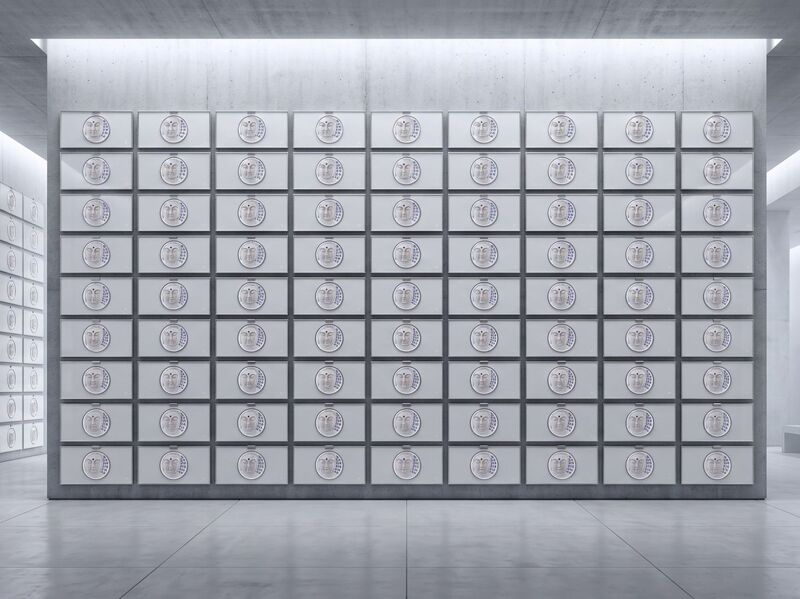
Too few offering tables. Invisible on ordinary days; at peak there is nowhere to put offerings and they end up on the floor.
Badly placed bins. Waste volume multiplies at peak; too few bins means piles.
Too few handwashing stations. Queues for washing block the aisle.
Too few lifts. In a multi-storey hall, lift queues at peak run to ten-plus minutes.
All four can be asked about on site: "Are there enough offering tables at Qingming?" "How long is the lift queue?" Staff usually tell the truth, because these are their daily pain points.
If your family visits mainly at Qingming. Choose an inner position on a secondary aisle, away from the main route.
If your family visits off-peak (a week before Qingming, say). Peak impact is small, so you can take an aisle-side position and enjoy the space.
If your family is large (six or more at once) Look at standing space in front before looking at how good the position is.
Q: How do I know how crowded a hall gets at peak?
Ask the peak single-day attendance, then look at aisle width. Three thousand people with a 1.5 m aisle will be crowded.
Q: Can we visit off-peak?
Yes, and I recommend it. A week before or after Qingming: fewer people, quieter, easier parking.
Q: Do halls restrict numbers at peak?
Some operate timed booking. Ask whether there is a booking system when choosing.
Q: Does crowding affect the niche itself?
Yes. Moisture, dust and knocks carried by foot traffic all concentrate on the peak route.
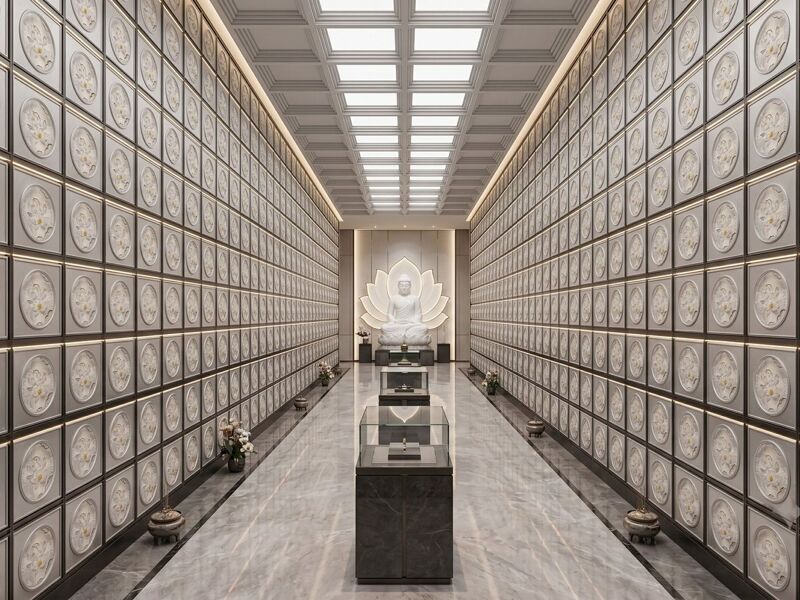
The visitor peak is a factor you cannot see on an ordinary day and cannot avoid in use. Ask three numbers, read four traces, and you can judge what this hall looks like on Qingming. When choosing a niche, do not only look at how it is when quiet — think about how it is when crowded, because what families actually remember is usually that most crowded morning.