WeChat: (+86)13978873330 Email: 381784025@qq.com

WeChat: (+86)13978873330 Email: 381784025@qq.com

The term "opening the light and dotting the eyes" appears often in the installation process at a columbarium but is it actually required? The answer depends on whom you ask: the funeral company says it is essential, the monastic says it is optional, the hall says it does not intervene. This breaks the matter into three layers: what the rite does, when it is needed, and when it is not.

Opening the light is a Taoist liturgical sequence used on images of deities Buddha images and the tablets of niches meaning to "bestow spiritual presence". Applied to a tablet the full sequence includes:
- Purify: purify the altar, the tablet, and the person (the celebrant washes hands). - Invite: invite the deity, invite the ancestors to take their place. - Dot: mark specific points on the tablet with a cinnabar brush. A tablet is usually dotted at three places — the heading, the name, and the dates; an image is dotted at eyes, ears, mouth, nose and heart. - Mirror: hold a round mirror to the tablet, for the sense of "seeing". - Activate: activate seat offer incense.
It runs 20–40 minutes with three to five participants. The fee depends on the celebrant, several hundred to several thousand yuan, scaled to the size of the rite.
Note that this belongs to the Taoist system. The Buddhist equivalent is not called opening the light but "sprinkling purification" or "installation", using recitation and pure water rather than cinnabar. The two cannot be mixed — using a cinnabar brush on a tablet in a Buddhist hall is usually stopped.
One, an altar at home and long-term offering. Here consecration has meaning — the tablet changes from "a piece of wood" into "an object of offering", and the thing you light incense to every day is clearly identified.
Two, the family has a settled religious tradition. The elders are used to the sequence and feel uneasy without it. In that case the value of the rite lies in reassuring the elders; there is no need to argue whether it works.
Three, the tablet was hand-carved to order. Traditionally a carved tablet is only "finished" after consecration; it is part of the craft, not an option.
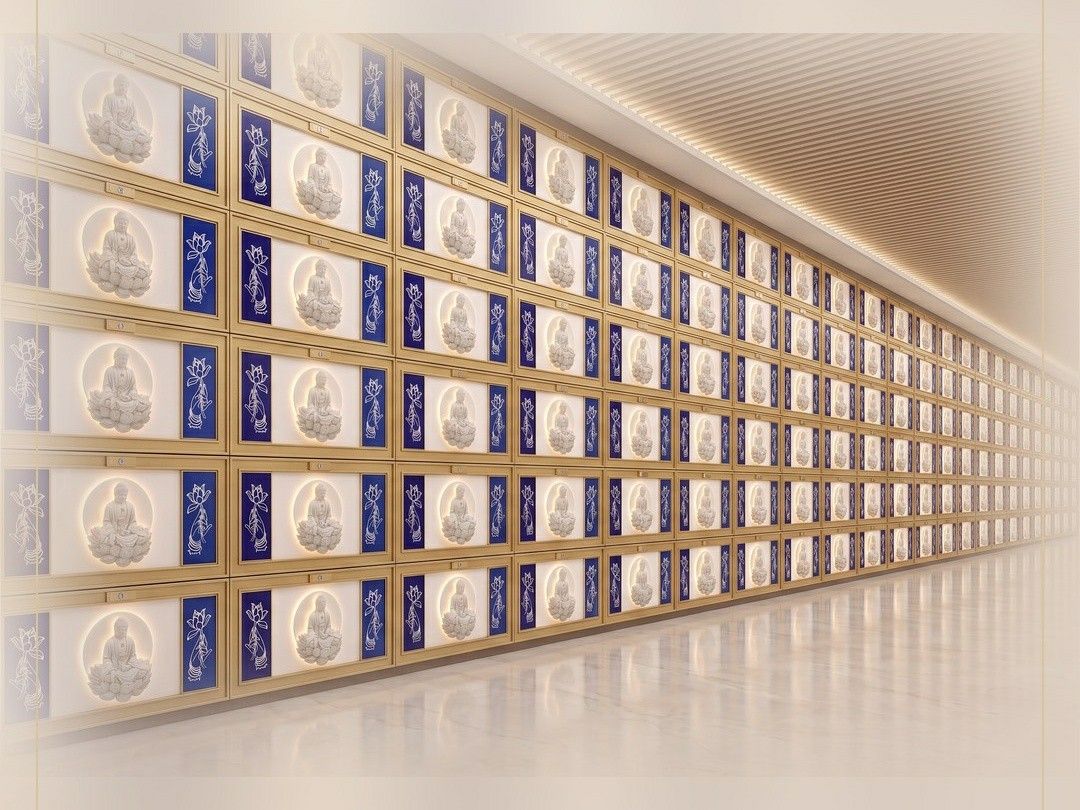
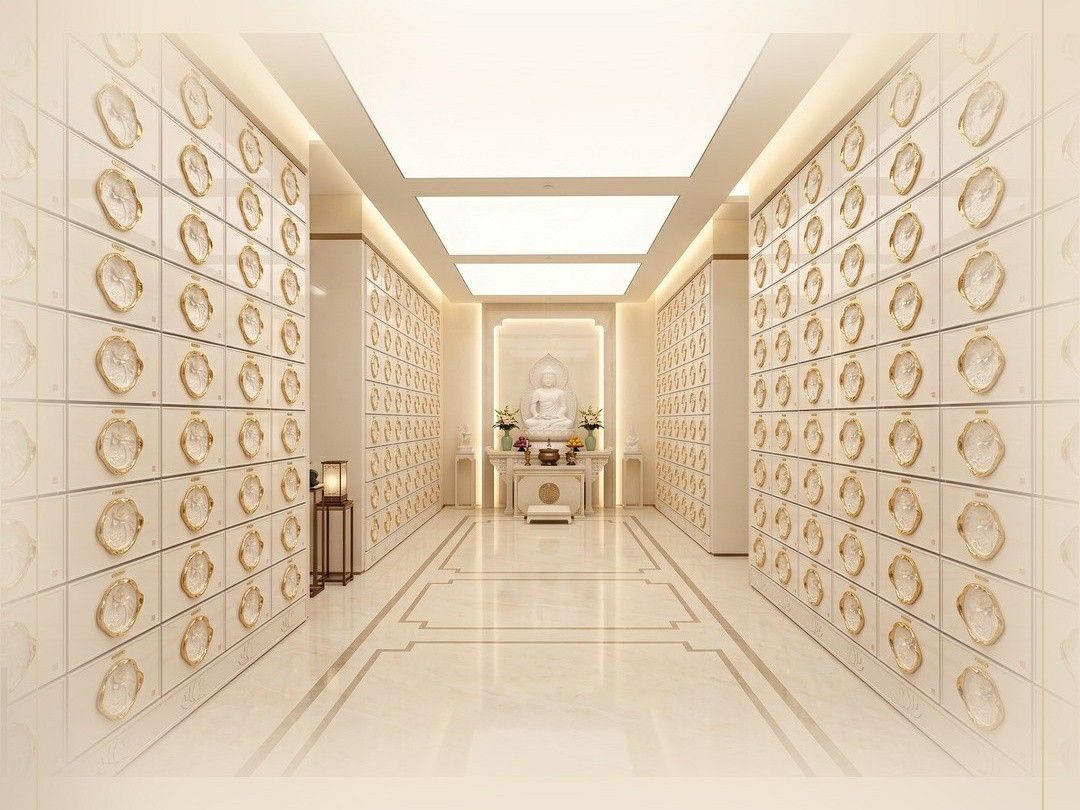
First, a columbarium tablet area is public space, not a family shrine. A wall in the tablet area holds several hundred tablets; consecrating one of them individually means nothing administratively. Most halls run a uniform installation — recitation, incense, seating — identical across the building, with no individual liturgy.
Second, what matters on a niche tablet is the name, not the spirit. In the structure of a columbarium, the niche holds the body and the tablet holds the name. The name stands by being written correctly: secular name, dharma name, dates, offerer four lines without error. Get one character wrong and ten consecrations will not fix it.
Third, a rite cannot substitute for registration. Consecrate a tablet that is not registered and the hall cannot trace it when something goes wrong; register it properly and the tablet stands without any consecration.
Most halls work on three rules.
1. Non-intervention. If the family wants to bring in a celebrant, and it does not disturb others on the premises they generally do not stop it. 2. Prior notice. Bringing a celebrant in, using a burner occupying the walkway — these need registration. Some halls require the celebrant's identification. 3. Time limits. The walkway in a tablet area is usually only 1.2 m wide so the time and space a ceremony occupies must be agreed with the hall to avoid clashing with another family.
The question is simple: "We want to bring a celebrant for consecration — how many days ahead should we register, and are there time restrictions?" Two sentences avoid being stopped at the door.

If you do not want a religious liturgy but still want a formal beginning in the columbarium, use this.
- Purify. Wipe the tablet and the ledge with a damp cloth and let it dry. This step is actual cleaning, not symbolism. - Read. The eldest son or chief mourner reads the four lines aloud, to those present. Reading them correctly is itself a check - Offer. Three fruits, three cups of tea, one bunch of flowers set straight. - Recite. A passage of the Buddha's name, or a remembrance text you wrote, one to three minutes. - Announce. State clearly that the tablet is installed today and that the family will come each Qingming and anniversary then take leave.
Five actions, fifteen minutes, no celebrant, no cinnabar. This works equally in a columbarium tablet area: simple in form, complete in content — because the substance of installation is the family confirming whom this tablet represents, not instilling something into it.
The likeliest trouble with consecration is opaque pricing.
The common pattern: a funeral company's "installation package" includes consecration, without saying how many celebrants, for how long, or whether travel is extra; the price rises on site The way to avoid it is to ask three specific numbers: how many celebrants, how many minutes, and whether the total includes travel and incense.
The other trap is the claim that "interment requires consecration". That is not a hall rule; it is a sales line. Niche registration looks only at documentation, not at whether a rite was performed.
Q: Can a Taoist consecration be done in a Buddhist columbarium?
A: Most do not allow cinnabar or talisman burning on the premises. Use the Buddhist sprinkling and recitation instead or hold the consecration before interment outside the building.
Q: Can a consecrated tablet be replaced?
A: Yes, with re-registration of the tablet records. By tradition a consecrated tablet should not be changed casually; in practice a replacement requires a change procedure and a stated reason.
Q: Can we dot the cinnabar ourselves at home?
A: Technically yes, but someone who knows the liturgy should be present; dotting the wrong places is itself a discourtesy. Doing it at home, use the simplified read, offer, recite, announce sequence instead.

Whether a tablet needs consecration has three answers: if it is offered at home long-term, if the family has a religious tradition, or if it was hand-carved, do it; if it is in a columbarium tablet area, if nobody visits regularly, or if it is only to complete a procedure, it is unnecessary. The value of the rite is in reassuring the elders, not in replacing registration. Four lines written correctly are worth more than ten consecrations.