WeChat: (+86)13978873330 Email: 381784025@qq.com

WeChat: (+86)13978873330 Email: 381784025@qq.com

For the ashes of one person, an urn can cost a few hundred or tens of thousands. Behind the gap is not "expensive means better" but a trade-off among four physical properties: weight, brittleness, sealing, and moisture resistance. And the environment of a columbarium — stable temperature and humidity, little vibration, no direct light — amplifies each material's strengths and equally amplifies its weaknesses.
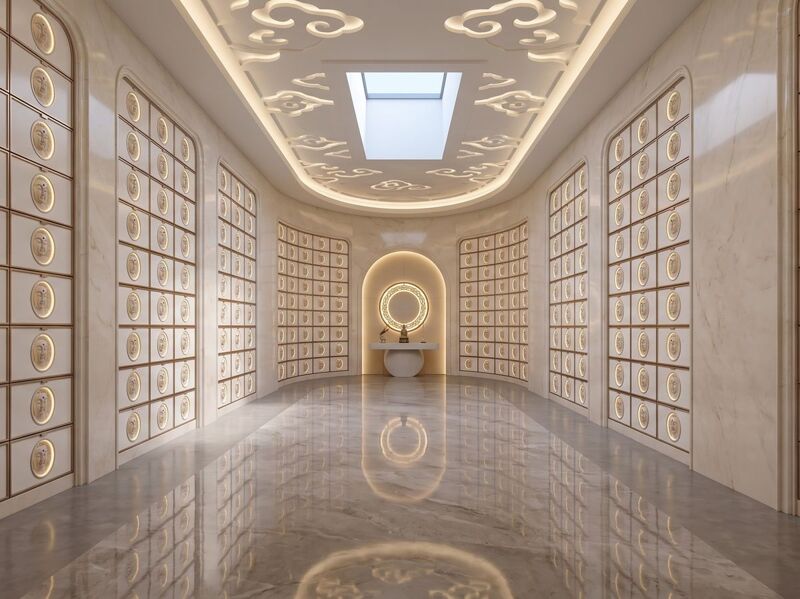
Stone (including solid marble): density 2.6 to 2.9, twice the weight of ceramic at the same volume; a single urn often reaches 8 to 15 kg. Hard and brittle — a knock on an edge is a chip that cannot be restored.
Ceramic (including bone china and celadon): 3 to 6 kg, beautiful glaze, shatters on impact; the rim is only 8 to 12 mm thick and chips most easily.
Metal (copper, stainless steel, zinc alloy): 3 to 8 kg, the best sealing, able to take a threaded lid with a compression ring; conducts heat quickly, so the inner wall condenses when temperature swings.
Timber (rosewood, ebony): 2 to 4 kg, warm in appearance, expands and contracts with humidity, cracks or warps within two years and seals worst of all.
Once inside a niche, the difference between these four is not in the pattern. It is in the failure mode. A niche's temperature and humidity are relatively stable, so material life ultimately comes down to two things: brittleness and moisture.
Stone urns are priced by block and labour. The first problem inside a niche is weight: 15 kg cannot be carried by one person, so handling requires two; and the concentrated load on the shelf goes from 8 kg to 15 kg, already approaching half the safe value.
The second is brittleness. The wall looks 15 to 25 mm thick, but impact resistance is poor — stone fails by brittle fracture with no warning. Knock the urn body against the door frame while handling and the edge chips in one go.
The third is size. Stone urns of 280 to 300 mm diameter need a niche with an internal width of 450 or more. A 400 niche will take it in but not take it out — the most common "bought the wrong niche" in the industry.
Ceramic holds most of the market, with the best balance of cost and appearance. The weak point is the rim: to achieve a tight seal the lip is made only 8 to 12 mm thick, and one knock chips it — and once chipped, the seal is gone.
Before a ceramic urn goes into a niche, wrap a soft rubber edge protector around the rim. A few yuan of cost prevents ninety per cent of chips.
The second weak point is the glaze: an abrasive cloth leaves fine scratches and the lustre goes within a few years. It does not affect function, but it affects "whether it looks dignified" — which is exactly what families care about.
The third is thermal shock. Ceramic craze-cracks under rapid temperature change. If a supply diffuser blows directly at the niche, cold winter air can produce fine cracks. The cracks do not penetrate, but moisture seeps in slowly.
Metal seals best of the four: a threaded lid with a silicone ring is close to airtight. In humid regions that is a substantive advantage.
The price is condensation. Metal conducts heat fast, so when the air conditioning cycles the urn wall temperature follows, water beads on the inner surface, collects at the base, and soaks into the ashes.
The fix has three steps: desiccant inside the urn, a 5 mm EVA moisture mat beneath it, and maintained airflow at the niche.
One common misconception: stainless steel does not mean rust-free forever. Under chloride exposure even 304 pits, and if a hall uses chloride-based cleaners long-term, the contact area between urn base and shelf fails first.
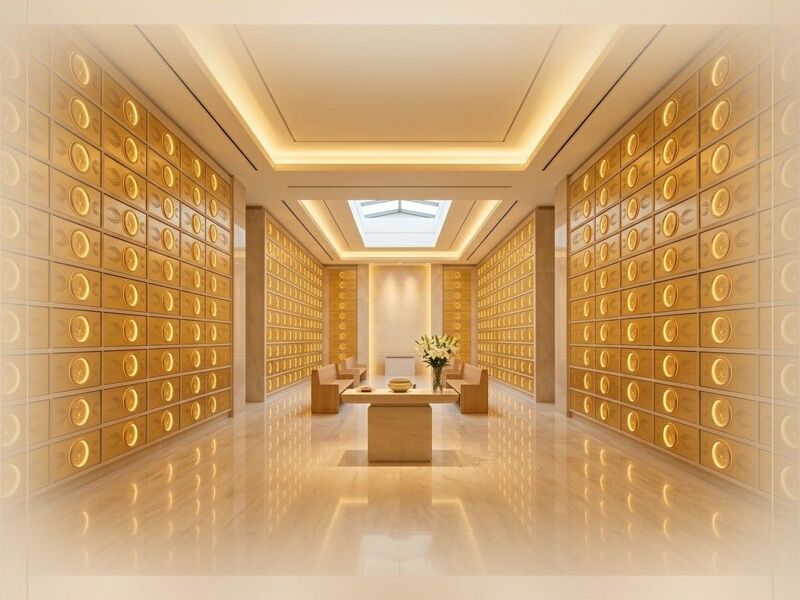
Timber is the warmest in appearance, and its fatal weakness is water absorption. When hall humidity rises from 55 to 75 per cent, a timber urn expands 0.3 to 0.5 per cent, and the joints open first — once open, the lid no longer compresses, which means no seal at all.
The second problem is insects. Untreated timber may carry eggs that hatch after interment and infest the whole cabinet. A timber urn must come with a pest-treatment certificate.
If you like the look of timber, the practical route is "inner liner plus timber shell": a stainless or ceramic inner vessel doing the real sealing, with a timber shell outside for appearance. Thirty to fifty per cent more expensive, and it sidesteps timber's weaknesses.
Long-term storage in a humid region: metal liner with decorative outer shell; sealing first.
Limited budget: ceramic choose a rim of 12 mm or more, and protect the rim during handling.
Appearance matters and someone visits regularly: stone, accepting the weight and brittleness, handled by two people.
Preference for timber: choose a lined construction, never solid timber.
The niche environment will not make any material "go bad", but it will magnify the shortcoming until it is visible Choosing an urn is not choosing whether the material is expensive. It is choosing which failure mode you can least accept.
Q: Will a stone urn crush the niche shelf?
A single urn of 15 kg is within the 25 kg safe load, but must sit centrally or near an upright, not at the shelf edge.
Q: What do I do about condensation in a metal urn?
Desiccant inside, moisture mat underneath, and maintained airflow at the niche — do all three.
Q: A ceramic urn with a small chip on the rim — still usable?
Not long term. A chip destroys the sealing face. A minor chip can be compressed with an added silicone ring, but check it annually.
The difference between the four materials comes down to two words: brittle and damp. Stone and ceramic fear brittleness; metal and timber fear moisture. The urn will sit in that niche for decades, and knocks during handling, abrasion during cleaning and seasonal temperature swings all accumulate. Understand that first and you are closer to the answer than the price tag will take you.