
WeChat: (+86)13978873330 Email: 381784025@qq.com

WeChat: (+86)13978873330 Email: 381784025@qq.com

"Do odd numbers or even numbers work better?" comes up constantly when choosing a niche, and the answers usually come in two versions: one says odd is yang and even is yin; the other says consult the birth chart.
Neither claim can be verified. What can be verified is something else: the number determines whether you will be able to find this niche later.
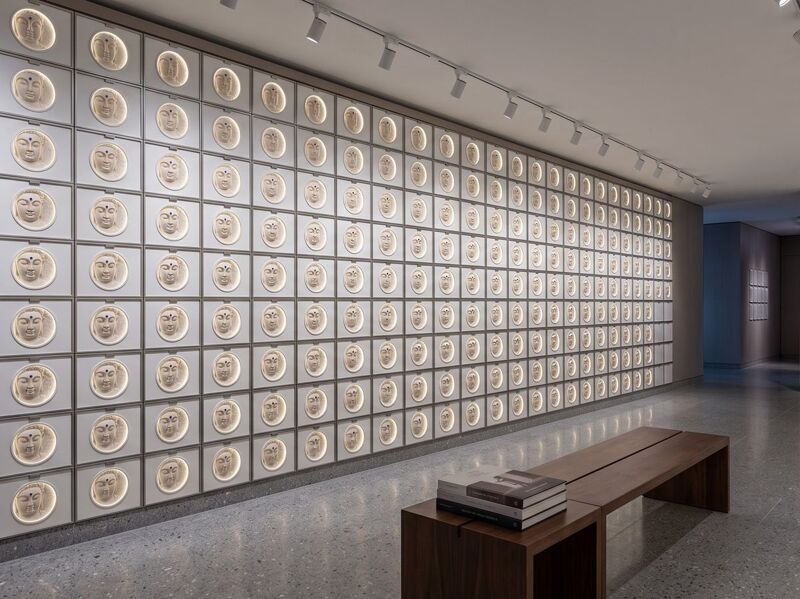
The numbering system in a columbarium hall is essentially a set of location codes. The usual structure is zone–row–column–tier four levels of digits.
Its purpose is to let families staff and the system talk about the same coordinates. So there is only one criterion for good numbering: can it be found within thirty seconds.
The odd/even distinction comes from the layout Some halls split columns left-odd and right-even, odd on one side and even on the other; others number sequentially 1, 2, 3, 4 straight through.
The problem with the first is that families cannot remember whether odd is left or right. The problem with the second is that sequential numbers have no visual grouping, and you lose your place halfway down the row.
First, whether plates are mounted consistently. Within a row, number plates should all be at the same height on the same side of the door panel. I have seen halls where plates sat top-left on one niche and bottom-right on the next, and finding a position was pure guesswork.
Second, whether the numbers match the drawing. If the contract says row 3, column 12, the plate on site must read row 3, column 12. Verify before handover; this is where errors cluster.
Third, whether there are skipped numbers. Some halls skip because of columns or service access: 12 jumps straight to 15. Skipping is not a problem in itself, but it must be marked on the wayfinding signage or families assume they have gone the wrong way.
If an elder in the family insists on odd or even, my advice: respect it, but do not pay extra for it.
In practice, within the available range, pick the odd or even number the elder prefers. If it comes with a premium, drop the preference.
The reason is concrete: odd or even changes no physical condition — not clear height, not daylight, not humidity. It changes how it feels, and a feeling should not carry a premium.
As for "odd is yang", that comes from traditional yin-yang thinking, and interpretations differ by region. Some places hold that men take odd and women even; others reverse it. Since the conventions disagree, there is no such thing as choosing wrong.
This is the most overlooked point.
Niche numbering and ancestral tablet numbering are two separate systems. Some facilities number tablets independently, so the family finds the tablet first and then the niche — and if the two numbers do not reconcile, they walk back and forth.
The correct approach: in the contract annex, state both the niche number and the tablet number, and note their correspondence. If the operator's system allows, mark the niche number on the tablet itself.

Three practical suggestions.
Prefer memorable numbers. Row 3, column 3; row 6, column 6. Families do not forget them. This is not superstition, it is usability.
Avoid confusable numbers. 12 and 21, 16 and 19 — easy to misread at a distance.
Record the full coordinate. Not "third floor Zone A", but "third floor, Zone A, row 3, column 12, tier 5". Photograph it, with the number plate and a nearby reference object in frame.
- Do the zone, row and cell numbers match the contract? - Do the niche number and the tablet number correspond? - Are adjacent niche numbers consecutive? Ask why any numbers are skipped. - Whether the hall uses Arabic or Chinese numerals — it should be consistent throughout. - Where tablet and niche numbers differ, the niche number on the contract governs.
Q: Does choosing an odd number affect feng shui?
A number is a management code; it does not constitute a direction Orientation is set by the building, unrelated to odd or even.
Q: Are even-numbered niches cheaper?
Not necessarily. Price depends on position, tier, daylight and specification, with no stable relationship to odd or even.
Q: Can a number be changed?
Generally no. During refurbishment or renumbering the hall may adjust them uniformly, and will issue an old-to-new comparison table.
Q: What if the family cannot remember the number?
Use QR code lookup, or keep a photograph of the number plate with surrounding references on your phone. Most new halls already support scanning to locate a niche.
Before signing the niche contract, do three things:
1. Compare the number on the contract with the plate on site, digit by digit. 2. Take a photograph that includes both the plate and a nearby reference. 3. Ask whether the zone has skipped numbers, and if so, whether they are marked on the signage.
That takes under ten minutes. Get the number wrong and every future visit costs an extra trip. Get it right and the niche is genuinely yours.

Odd or even is not really a question of auspiciousness. It is a question of whether you can find it later. The value of a numbering system is clarity, not luck. What is worth insisting on: the plate exists, its position is consistent, and it matches the contract. Do those three and odd or even makes no difference.






