
WeChat: (+86)13978873330 Email: 381784025@qq.com

WeChat: (+86)13978873330 Email: 381784025@qq.com

Same columbarium, same batch of frames, same door panels — and yet the price between tiers one and two and tiers three and four can differ by a factor of two Families often ask: the thing is identical, so on what basis?
It is a fair question, because it goes straight to the nature of niche pricing. A columbarium niche does not sell a product; it sells a position. The product is a standard part. The position is unique. And the price gap between positions is set mainly by three things, only one of which has anything to do with feng shui.
The price peak acknowledged across the industry sits at roughly 1.4 to 1.6 m above floor level. The reason is plain: you can look straight in while standing.
Do not underestimate the phrase "look straight in". A low niche requires bending, and bending is a burden for anyone over sixty, an inconvenience for anyone in a skirt, and a torment for anyone holding a child. A high niche requires tilting the head back, and once you tilt back you cannot see what is inside, nor reach it.
So the real premium is not "a good view". It is ergonomic comfort. In columbarium design 1.4 to 1.6 m is the golden band, and the number of niches a hall can place in that band is fixed — scarcity follows from that.
There is an easily overlooked counter-example. A wheelchair user's eye level is around 1.1 to 1.2 m. For them the expensive golden tier is precisely the one they cannot see. So a responsible columbarium should reserve a row of accessible niches at the lower level, and should not make that row the worst position simply because "low is cheap". Pricing purely by eye level cuts a whole group of families out of the room.
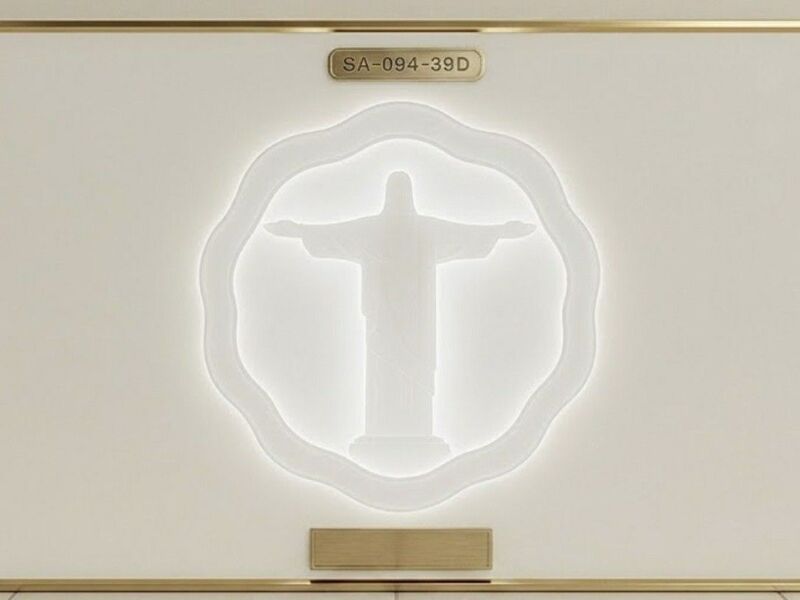
In a Buddhist columbarium the main wall carries a Buddha or Bodhisattva; in a Christian columbarium it carries the altar. Either way, the first few rows directly facing the main figure carry a premium.
Behind that is not superstition but a sense of orientation Standing at the niche, you look up and meet the Buddha's eyes; you look down and see your relative's name. When those two happen in one sightline, the experience is emotionally complete. What a niche needs is not just a compartment. It is an angle in which a conversation can take place.
In design terms this has a concrete consequence: the first three rows directly opposite the main figure are the most valuable positions in the hall. They must be laid out first, given the best tier heights first, and given glass door panels or better surface finishes first. Doing the most expensive positions cheaply is the least forgivable waste in this business.
Every columbarium has niches that will not sell: at the dead end of an aisle hard against a structural post, tucked under the stairs, with an equipment room behind.
Discounting these is not an industry conspiracy; it is a market outcome. Foot traffic reaches them last, they collect clutter, and the light is worst. Discounts typically run 10% to 20%.
But I would offer a contrarian view: discounted positions can be rescued by design. Give an end position a piece of landscaping, a group of seats, a wall light, and it turns from "leftover" into "quiet". Add side closure panels to a niche hard against a post and it visually becomes a bounded shrine recess — which often feels more like a place of one's own than a continuous row does. Half the value of a niche comes from its position; the other half comes from how it is handled.
Many projects price on "higher is more expensive", climbing from tier one to tier six. That is wrong.
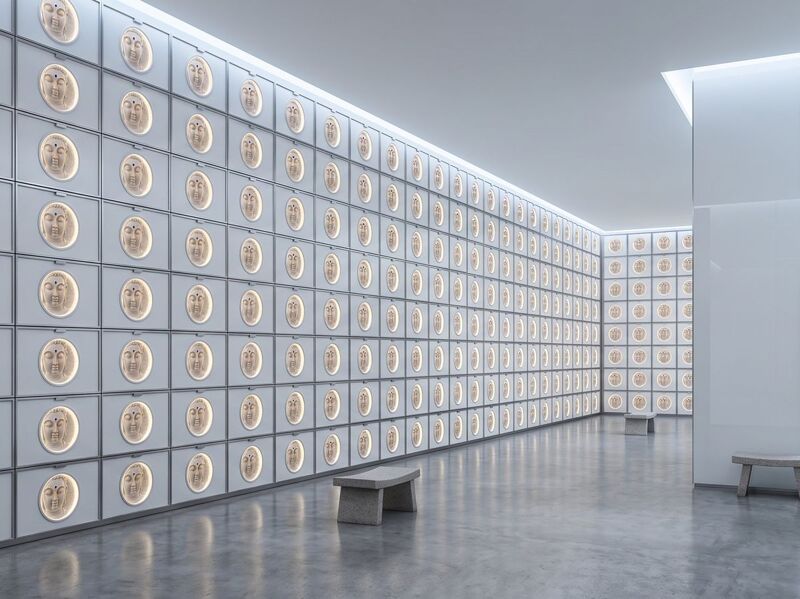
Above tier six you need a stool or a ladder, and elderly visitors simply cannot get there. The truly high positions only appeal to the young, while the main buyers of niches are over fifty. So the correct price curve rises in the middle and flattens at both ends: tiers three and four highest, tiers one and two slightly lower (accessibility), tiers five and six lower again.
When I lay out a hall I prefer to draw that curve in advance, because it directly determines the tier configuration. If tiers five and six are destined to be discounted, make them small-format niches and use dense packing to gain quantity. Make tiers three and four the standard niches, and use better materials on their door panels. A columbarium's tier configuration and price schedule should be decided together from the start.
My view: within one hall, the ratio between the highest and lowest price is healthiest at around two to one.
Too narrow, and the good positions get fought over while buyers feel they paid a premium for nothing. Too wide, and the low-priced positions get labelled as bad stock that will not sell in ten years; and once a family realises they were assigned to "the cheap tier", that discomfort is remembered for a long time.
A columbarium is a long-term business. The price gradient is not only a financial tool; it is also telling customers that we have taken every position seriously.
Q: Is an expensive niche really "better"?
In usability, yes: you can see it standing, reach it with your hand, and open the door without effort. In meaning, not necessarily — many people end up choosing the hall that is close to home and easy to visit often, rather than the most expensive niche in it.
Q: Why do some halls price the lower tiers higher?
Usually it is a conversion of an old building with limited floor-to-ceiling height, or the lower positions have been raised. The test is simple: stand at the niche and see whether the sightline is level. The tier that is level is the expensive one.
Q: Can the price gap be adjusted later?
It can, but painfully. Niches already sold cannot be reduced in price; you can only re-package the unsold stock into tiers. So the price gradient has to be right the first time, at layout stage. It belongs to the same logic as tier configuration, door panel material and the numbering system.
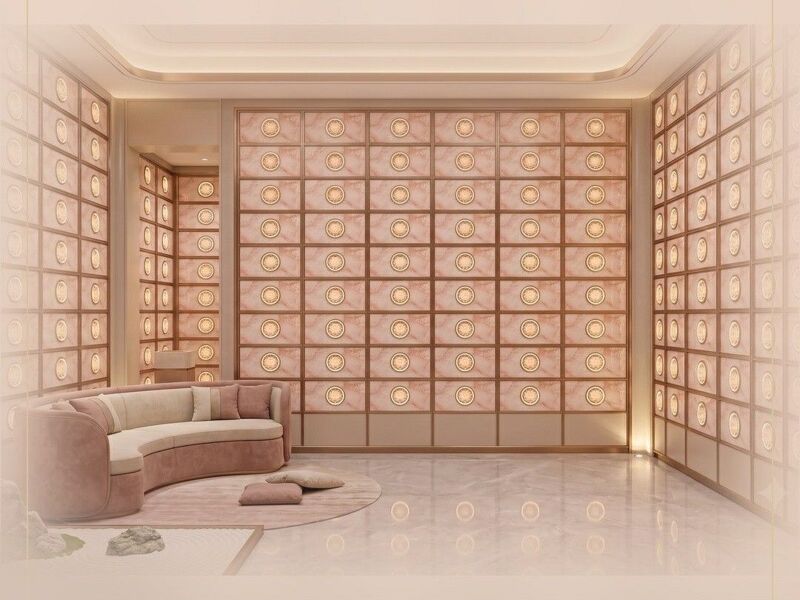
The price of a columbarium niche is the price of a position, and the price of a viewing angle. Eye level decides comfort, distance from the main figure decides emotion, and corners and end positions decide discounts. Think those three through and a hall's price schedule no longer needs guesswork — it grows by itself.






