WeChat: (+86)13978873330 Email: 381784025@qq.com

WeChat: (+86)13978873330 Email: 381784025@qq.com

After the ceremony the part most likely to go wrong is not the ritual but the clearing up. A plate of fruit left overnight at the niche attracts fruit flies by morning; a box of cooked food shut in the car is inedible two hours later Handling offerings at a columbarium has three boundaries: what can be taken away, what must be dealt with the same day, and what must be discarded on the spot. Sort that out and the clearing up is clean.

The first: take it away. Fruit, biscuits, dried goods, unopened drinks — lift them from the niche and bag them. Packed and carried home this is "eating the peace".
The second: time-limited. Cooked food, cakes, cut fruit platters. Refrigerate within two hours in summer; do not eat after four.
The third: discard on the spot. Bouquets, peel, gravy incense ash, disposable cutlery. Columbaria generally provide food-waste and general bins; separate them.
The point of sorting is not fussiness. It is that the next family should not smell yesterday's dinner.
"Eating the peace" is custom, but food poisoning is real. Three boundaries.
Time. Cooked food, no more than two hours at room temperature (one hour in summer). Refrigerate as soon as you get home; do not leave it in the car while you run errands.
Who. Not to children under three, not to pregnant women, not to frail elderly with weak digestion. These three groups tolerate bacteria poorly.
Reheating. Reheated cooked food must reach 75 °C at the centre. Warming it through without heating it properly is not heating it at all.
For low-risk items such as vegetarian fruit and biscuits the boundary can relax; for meat dishes and cakes containing egg or dairy, apply all three strictly.
These two are the most common residue left at a niche.
Bouquets. If the flowers are still fresh, take them home and put them in a vase. If they have wilted, strip the wrapping and put the heads-down stems in the food-waste bin. Wrapping paper and ribbon are general waste; do not mix them into food waste.
Peel. Do not peel fruit inside the hall and especially not before a niche. Take it home and peel it there Peel left in the hall attracts small flies within 24 hours, and those flies work their way into the door gaps of the niches.
Gravy and juices. Blot them from the offering table with kitchen paper, wrap and take away. Do not pour them into the burner into a vase, or down a sink — the burner will clump, the vase will stink, the sink will block.
Many families feel that leaving them "shows the intention". The consequences are specific.
Fruit flies. Ripening fruit attracts them within 24 hours; one female can lay several hundred eggs in a lifetime.
Mould. Cakes and buns grow mould within 48 hours at 60% relative humidity, which is typical of a columbarium.
Odour. The fats in meat dishes oxidise into a rancid smell, and that smell is absorbed by the niche gasket and is very hard to remove.
Spread of pests. One infested niche affects the whole row. This is the complaint a columbarium dreads most.
Most halls state explicitly that offerings must be removed the same day. It is not heartlessness; it is that these consequences are carried by everyone on the floor.
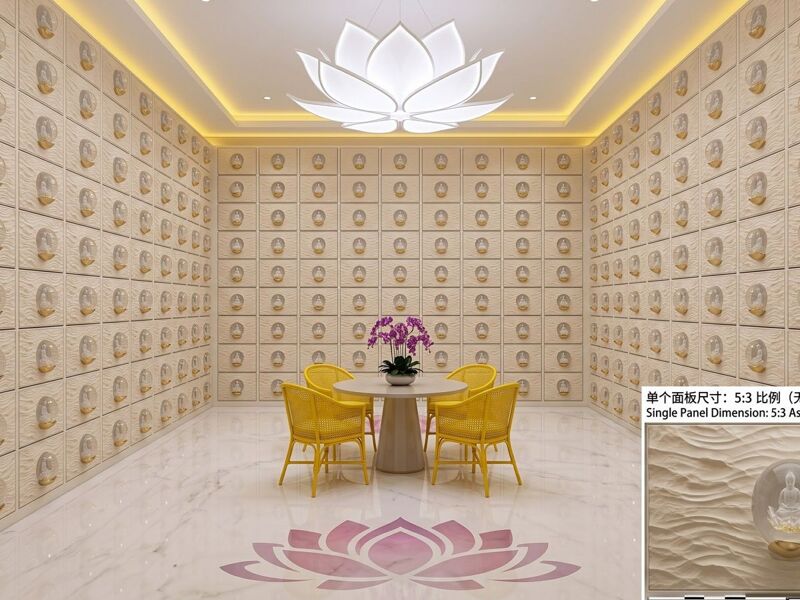
Follow this order and five minutes finishes it.
1. Take the perishables first. Cooked food and cut fruit, straight into a cool bag. 2. Then the dry goods. Fruit and biscuits, bagged. 3. Break down the flowers. Heads, stems and wrapping separated. 4. Wipe the ledge. Once with a wet wipe, once with a dry tissue, to remove water marks. 5. Check the floor. Any dropped stones or incense ash. 6. Lock the door, return the key.
Step four is the one most often skipped, and it decides what the next family sees. If the ledge carries water marks, the next visitor reads it as "nobody looks after this place".
Look at four things.
1. Are there separated bins near the exit (food waste, general, recyclable)? 2. Is there a hand basin? You need to wash after handling offerings. 3. Do the bins obstruct the walkway? 4. Is there a notice saying "please take offerings away the same day"?
The first matters most. In a hall with no food-waste bin, families either carry peel home or quietly drop it in a corner, and the latter is worse. The management standard of a columbarium can be read off its bin provision.
Q: Must the offerings be finished?
A: No. Eat a little to signify acceptance and handle the rest normally. Forcing it down only harms you.
Q: Can offerings that have been presented be given away?
A: Yes, but say that they were offered and how long they were kept. Do not give them to someone who does not know.
Q: Can fresh flowers be left at the niche?
A: Most halls allow three to five days, provided the vase is topped up and does not leak onto the ledge. Left more than a week without changing, the water stinks.
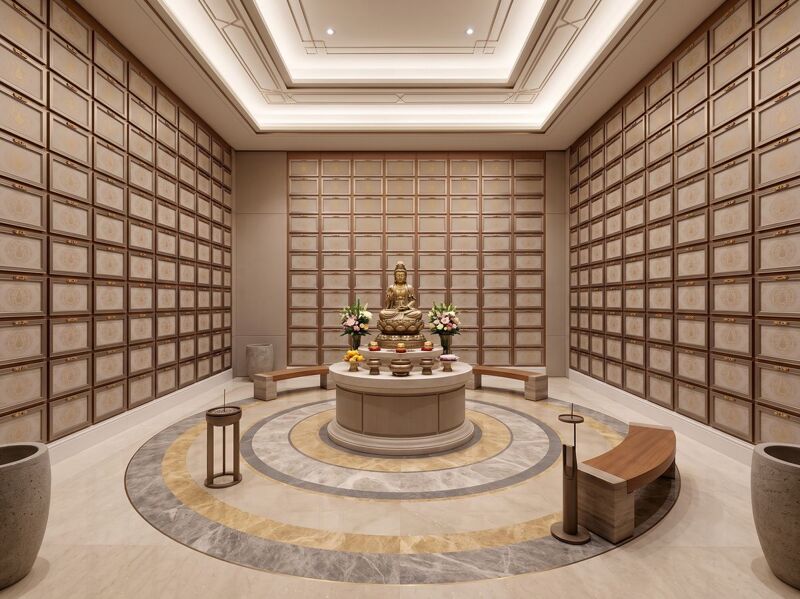
Handling offerings comes down to three sentences: what can be carried, carry; what is time-limited, deal with the same day; what should be discarded, sort on the spot. That 40 cm ledge, left clean, is what gives the next family their dignity Paying respects in a columbarium is intention in the first half and clearing up in the second.