WeChat: (+86)13978873330 Email: 381784025@qq.com

WeChat: (+86)13978873330 Email: 381784025@qq.com

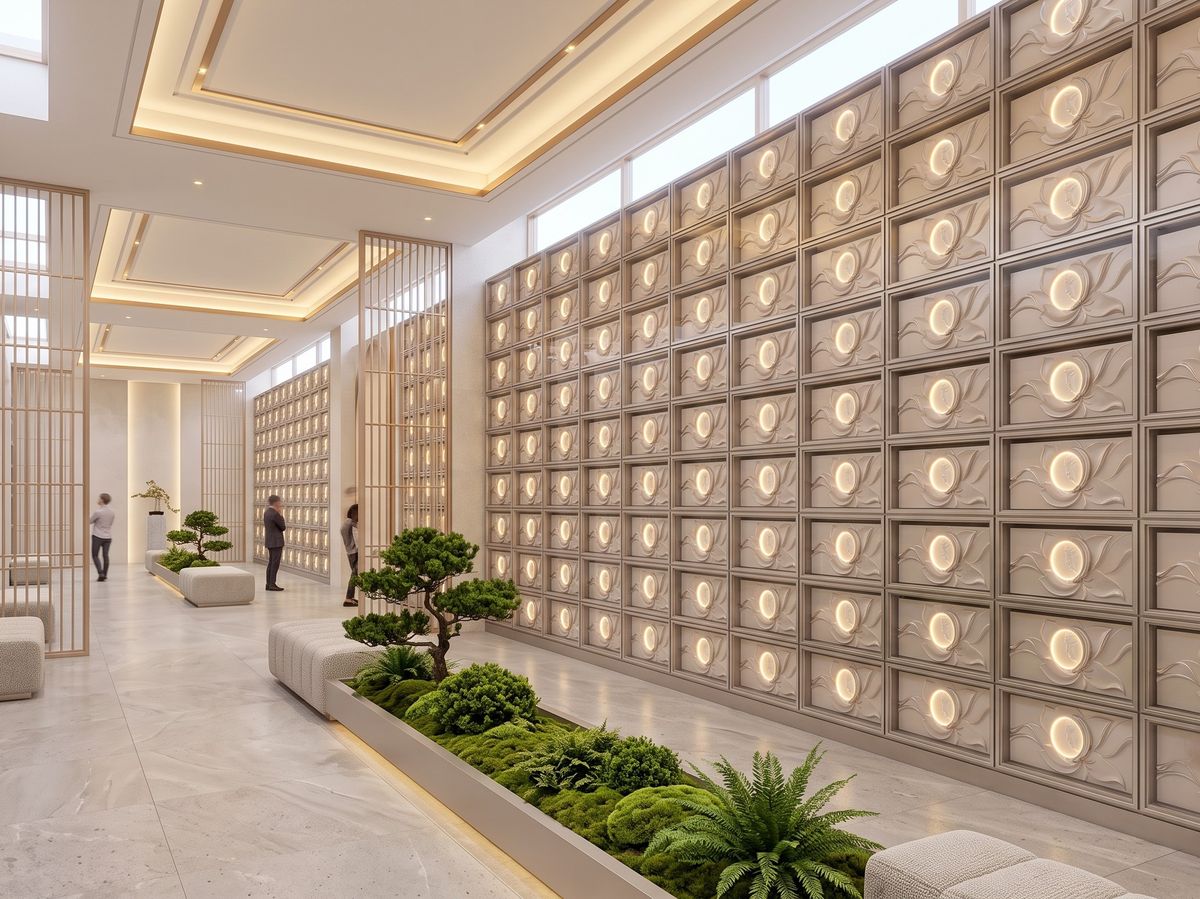
People who spend their first Qingming in a columbarium often feel it "doesn't feel like grave-sweeping": no weeding, no mounding soil, no paper weights, and it is over in twenty minutes. This is not a shrunken ritual; the setting has changed. A traditional grave is preparation in an open space; a niche is a visit in an indoor one. Understand the six differences and the first visit will not leave you flustered.

At a traditional grave, half of Qingming goes on preparation: pulling weeds clearing the drainage channel, mounding soil, laying paper weights checking the headstone for cracks. These actions make up the "sweeping" in grave-sweeping.
A niche has none of it. The hall does the cleaning; the family has one task: wipe the ledge in front of the niche.
There is nothing to weigh down with paper either. At a traditional grave, paper weights are a marker — they tell people this grave is tended. At a niche, the marker is the flowers and offerings.
First-timers tend to "look for work" here — wiping the ledge again and again, rearranging the offerings. Twenty minutes is enough.
A traditional grave allows a whole day. A columbarium does not.
A mid-sized hall takes 2,000–3,000 entries on a single Qingming day; the standing space before a niche is a shared resource, and if one household holds it for 30 minutes, the next queue forms.
So most halls enforce controls during Qingming: booking, time slots, 20–30 minutes per household. This is not meanness; it is arithmetic — a floor of 2,000 niches serving one hour each would serve eight households a day.
Families used to spending an afternoon find a 20-minute limit jarring the first time. Knowing in advance settles the mind.
A traditional cemetery is open; each family stands at its own grave without interference.
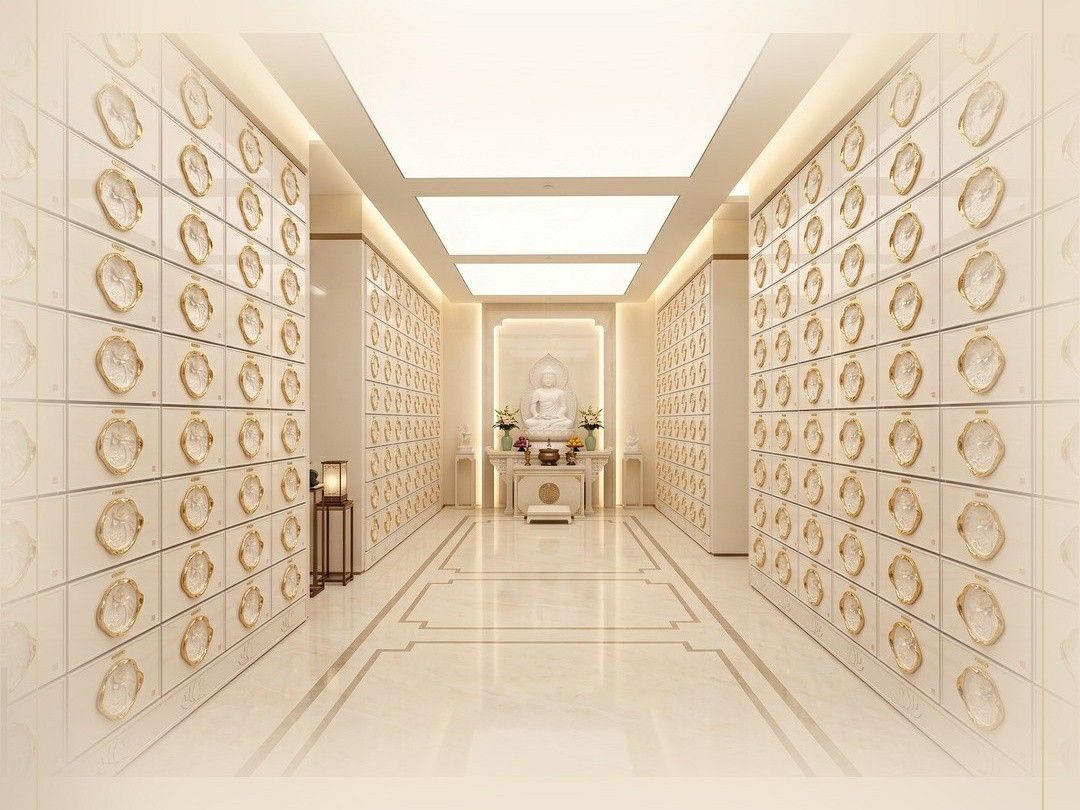
A columbarium is linear: entrance, check-in handwashing walkway, niche, exit. On one walkway, if the family ahead is still paying respects the family behind waits.
This is why halls institute one-way flow, temporary queue lines and batch admission at Qingming. It is also why "where you stand" suddenly matters — at a grave you can stand anywhere; before a niche, the wrong position blocks the entire walkway.
The offering table at a grave is large; a full spread of dishes is no problem. The ledge before a niche is only 40 cm deep and 60 cm wide.
What fits: one medium plate as the main offering, two small plates of fruit or vegetarian dishes, three cups, one bunch of flowers. Anything more has to go on the walkway, and things on the walkway are where accidents happen.
So Qingming offerings need designing down in advance: three kinds of fruit, one vegetarian dish, three cups of tea, a bunch of white chrysanthemums. Bring a full spread and you will carry it back untouched.
Traditional cemeteries tend to be in the countryside, reached directly by car, parked anywhere.
Urban columbaria sit on the city fringe or the edge of the built-up area; at Qingming the surrounding roads are controlled and a parking space is hard to find Most halls run shuttle buses from a metro station or a temporary car park.
Practical advice: check the shuttle timetable in advance; it is much faster than driving around looking for a space. The peak is 8–10 a.m., when the shuttle queue runs over 20 minutes; after 2 p.m there is essentially no wait.

A cemetery allows joss paper, candles and firecrackers in designated areas.
A columbarium bans fire almost entirely: no open-flame incense (in some), no joss paper, no candles, no firecrackers. The reasons are concrete — indoor space, smoke detectors, sprinklers, large quantities of combustible lining.
To burn paper you must go to a communal point outside; to use incense you must use the communal burner area or switch to electronic.
This is the difference most easily overlooked, and the one most likely to stop you at the door Every Qingming, someone arrives with a full sack of joss paper and is turned back.
Having listed the differences, here is what does not change.
- You still have to come. Twenty minutes at a niche weighs the same as an afternoon at a grave. - You still have to clean up. It has simply changed from weeding to wiping the ledge and taking the offerings away. - You still have to report the news. How the family has fared this year still has to be said. - You still bring the children. Memory passes down the generations; the form changes, the content does not.
Qingming at a columbarium moves faster, but nothing that should be done is left out.
1. Book ahead (most halls require a slot at Qingming). 2. Check the shuttle and road controls. 3. Reduce the offerings: three fruits, one vegetarian dish, three cups of tea, one bunch of flowers. 4. Bring wet wipes and dry tissues for the ledge. 5. Bring a reusable bag for the offerings and the rubbish. 6. Confirm how the key is collected (self-service or accompanied).
With all six in place, the whole process takes 40 minutes including the queue.
Q: Must you go on the day itself?
A: No. By custom the ten days before and the ten days after are all acceptable, and with half the crowd the experience is far better. If you insist on the day, go in the afternoon.
Q: Do niches need "paper hanging" at Qingming?
A: No such step. To signal that someone tends the niche, flowers and offerings are enough.
Q: Half the family is in a cemetery, half in a columbarium. How do we arrange it?
A: A cemetery usually takes half a day (weeding, mounding); a columbarium takes an hour. Go to the cemetery in the morning and the columbarium in the afternoon of the same day, or split across two days, to avoid rushing.

Qingming at a columbarium and at a traditional grave differ as preparation differs from visiting: half a day of weeding outdoors versus twenty minutes indoors for check-in, incense, offering and leave-taking. The form has changed; the weight of that stick of incense has not. Qingming in a columbarium tests not who stays longest but who arrives in order and leaves the place clean.