
WeChat: (+86)13978873330 Email: 381784025@qq.com

WeChat: (+86)13978873330 Email: 381784025@qq.com

The conclusion first: yes, but long-term is usually not advisable. Custom does not forbid it, and many places have a practice of temporary domestic keeping. The real question is not whether you may, but whether a home environment can sustain an urn.
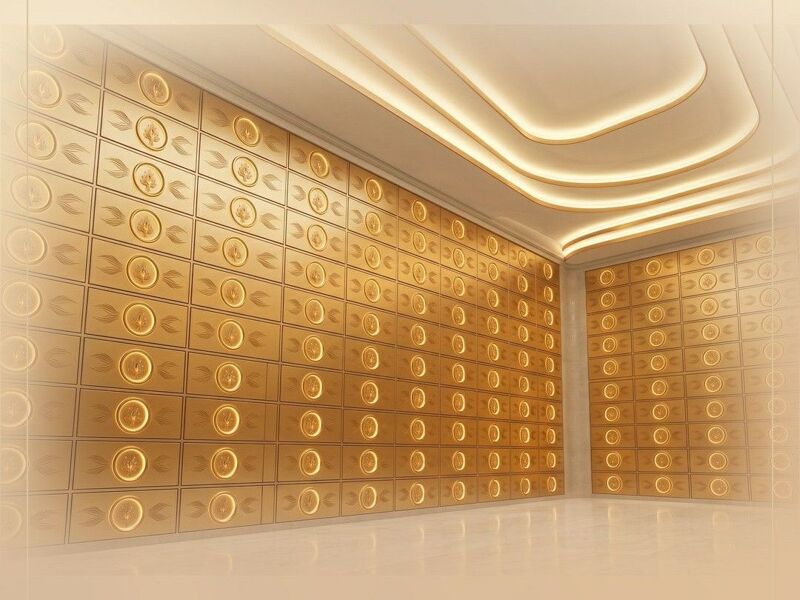
The reason a columbarium exists at all is precisely to provide what a home cannot: stable humidity, stable temperature, little vibration, and someone inspecting on a schedule.
The first is humidity. In the south, indoor humidity during the plum-rain season reaches 80 to 85 per cent, higher on the coast. Urn seals are mostly wax or silicone; under sustained high humidity, vapour migrates through the joint Once the ashes take on moisture they cake, irreversibly.
The second is temperature swing. With air conditioning and heating in use, the temperature at the urn's location can swing 8 to 10 °C within a day. Warm by day, cool by night, water beads on the inner wall and runs down onto the ashes. This is more insidious than external humidity, and a columbarium's constant temperature avoids it entirely.
The third is impact. A home is an active space: sweeping, moving furniture, children running, pets. A niche is a fixed cell; at home the urn is "an object placed somewhere". The knock risk is not on the same scale.
One: while awaiting interment. Between cremation and entering the niche there may be weeks or months — waiting for an auspicious date, for family to gather, for the niche to be finished. Taking the urn home during that period is customary and carries no substantive risk.
Two: during relocation. Moving from an old niche to a new one requires brief storage, usually days to a fortnight.
Three: the family wishes to "keep them close for a while". There is tradition in some regions, usually bounded at a hundred days.
All three are short-term, and they share one feature: a definite end date. Short-term can be managed by attention; long-term can only be managed by environment. That is the fundamental difference between a niche and a home. With an end date you can prepare for short-term conditions; without one you must design for long-term conditions.
One, choose the location. Avoid external walls, bathroom walls, kitchen walls Choose an internal wall, at least 60 cm above the floor inside a cabinet with no direct sun. A niche has none of these problems because the bank stands at least 50 mm off the wall with dedicated airflow; at home you can only compensate by choosing well.
Two, control humidity. Put a hygrometer in the cabinet, target 50 to 60 per cent. Above 70, run a dehumidifier or use a moisture absorber, replaced monthly.
Three, secure it. A 5 mm EVA non-slip mat under the urn, nothing pressed against its sides. If possible, keep it in a cabinet with doors to reduce airflow and impact.
Four, record the sealing date. The longer it stays at home, the shorter the re-sealing interval should be. Two years at home is roughly equivalent to four years of ageing in a niche.
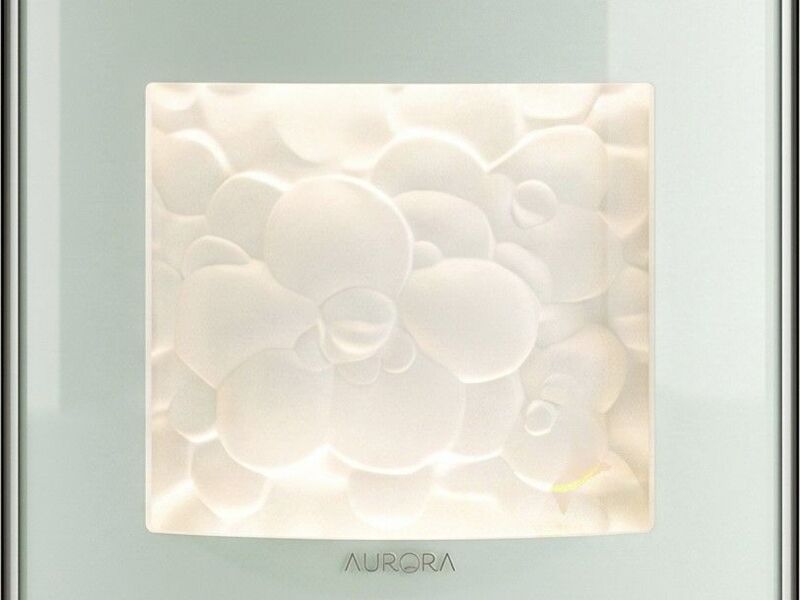
The first is the ritual route. Worshipping at home looks convenient, but in practice becomes "seen every day, so never specifically commemorated". A niche provides a fixed place and a sense of ceremony; visiting means going somewhere. At home it is always there, and the psychological weight is entirely different.
The second is disposal later. After ten years at home, entering a niche means going through the interment process again: opening, verifying the urn, re-sealing, choosing a date. The seal on an old urn has usually failed and must be redone. Nobody thinks of this when placing the urn; it all appears when moving it.
Both problems are, in essence, the parts a niche absorbs on your behalf. A home can compensate for humidity and stability. It cannot compensate for "a place".
Yes, it is needed. Three criteria: is the sealing material intact, has the desiccant discoloured, is there any odour when the lid is opened.
If any one is wrong, re-seal. The cost is low (a few hundred yuan for wax, less for a silicone ring), and it prevents sealing an already damp urn straight into a niche — which is the worst outcome: sealed, invisible, and not opened again for decades.
Facility managers usually carry out a seal check at interment. Do not skip it.
Q: Do I need to notify the facility if I take the urn home?
Yes. Where a niche is purchased but not yet used, most facilities require registering a "temporary keeping" status, or the numbering and records will not reconcile at interment.
Q: How long counts as long-term at home?
Beyond a year, risk rises noticeably. Beyond three years, you have essentially given up the environmental advantage of a niche.
Q: We have a shrine at home. Can it go there?
Yes, a shrine is usually the most humidity-stable place in a house. But still control humidity, and avoid incense smoke blowing directly onto the urn — smoke deposits accelerate seal ageing.
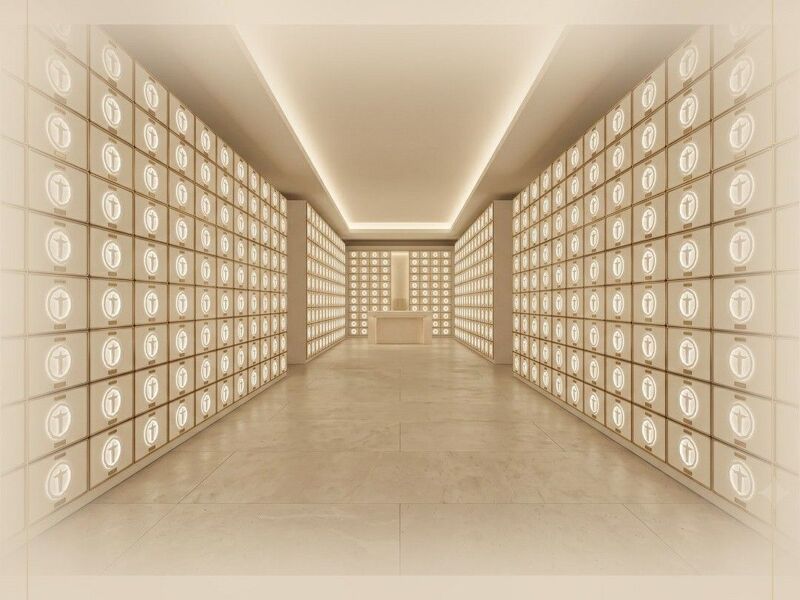
Can an urn be taken home? Yes — but decide whether "home" is a transition or a destination. As a transition it is fine: a few months while waiting for the interment date. As a destination, three accounts must be settled: humidity, temperature swing, impact. What a columbarium sells is never a cell of space. It is a set of conditions a home cannot replicate. Understand that and the decision is not difficult.






