
WeChat: (+86)13978873330 Email: 381784025@qq.com

WeChat: (+86)13978873330 Email: 381784025@qq.com

The old saying comes up constantly when choosing a niche Elders say "high is better, it does not get damp"; salespeople say "upper levels have better views". Half of it is right — but how high is "high" is something most people never consider Choose the top tier and the problems actually multiply.
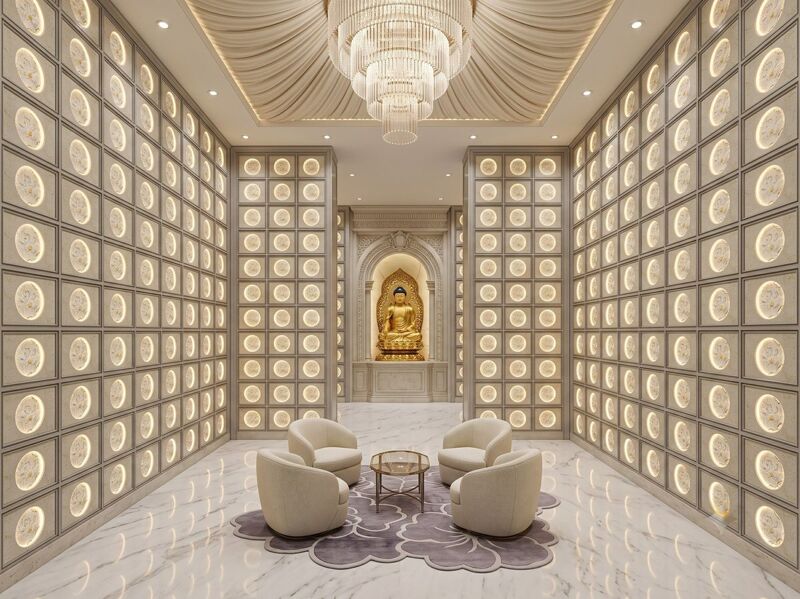
First, low positions are damp. Rising moisture from the slab, mop water, rain carried in at the door — all travel low, and mould appears earliest on ground-floor and bottom-tier niches.
Second, low positions collect dust. Shoe grit, paper scraps incense ash land on lower tiers more often.
Third, the sightline is poor. Crouching to look at the urn face is a burden for an elder.
So the original meaning is "avoid the bottom two tiers", not "higher is always better".
First, out of reach. With the urn face centre above 1.9 m, an elder struggles to raise a hand to open the door, and offerings must be lifted overhead. That niche is unsuitable for anyone over seventy.
Second, temperature swing. With poor roof insulation, summer heat transfer makes the top floor 2 to 3 degrees warmer than the middle and condensation risk is higher too.
Third, dependence on assistance. Upper tiers need a step stool, and an unstable stool is a safety hazard.
So the reasonable upper limit for "high" is: visible at standing eye level, door openable with a raised hand — usually below 1.8 m.
Taking a ten-tier bank as an example, the steadiest band is tiers three to six. By dimension: each tier 450 mm clear plus a 20 mm shelf tier three's urn face centre lands around 1.2 m and tier six around 1.6 m — precisely the standing eye-level range.
Niches in that band satisfy four conditions at once: no crouching, no stool, some distance from the floor, and not at the aisle mouth. It also explains why middle tiers cost most — the premium has grounds.
Visitors are all young and can reach; upper tiers are quieter. The bottom has poor moisture protection and the lowest two tiers visibly suffer rising damp. The lower tiers sit near the entrance with heavy traffic. In those cases, go two tiers higher.
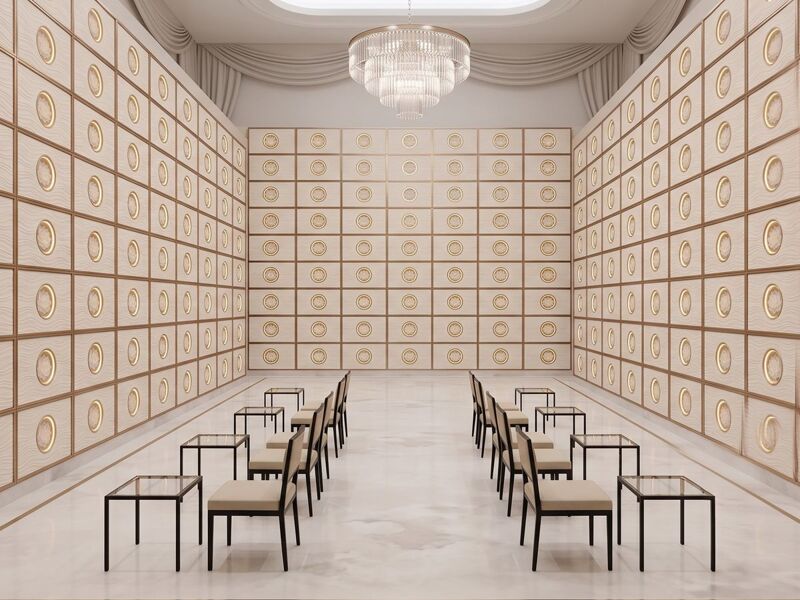
Visitors are elderly especially with knee problems. There is a wheelchair user in the family and a low position puts the sightline closer to seated eye level. The hall provides no step stool, so upper tiers are simply trouble. In those cases, a lower niche is more usable.
Measure the lowest tier's urn face height — below 0.5 m, an elder cannot use it Measure the top tier — above 1.9 m requires a stable step stool Check whether tiers three to six form a "golden band"; if it is already sold out, the facility's pricing is rational.
- A sightline height of 1.4 to 1.6 m is the least effort. - A niche requiring a step stool is not suitable for elders. - A niche requiring crouching puts the greatest load on the lower back when placing or removing an urn. - Within one row, a 20 cm height difference can mean a ten per cent price difference. - "Choose high, not low" only holds in a damp environment.
Q: Is "choose high, not low" a feng shui idea?
No. The basis is moisture, dust and sightline, all measurable.
Q: Can the top tier be chosen?
Yes, but confirm roof insulation and waterproofing, and provide a stable step stool.
Q: Is the bottom tier always bad?
No. For an elder with limited mobility who prefers to visit while seated, a low position suits better.
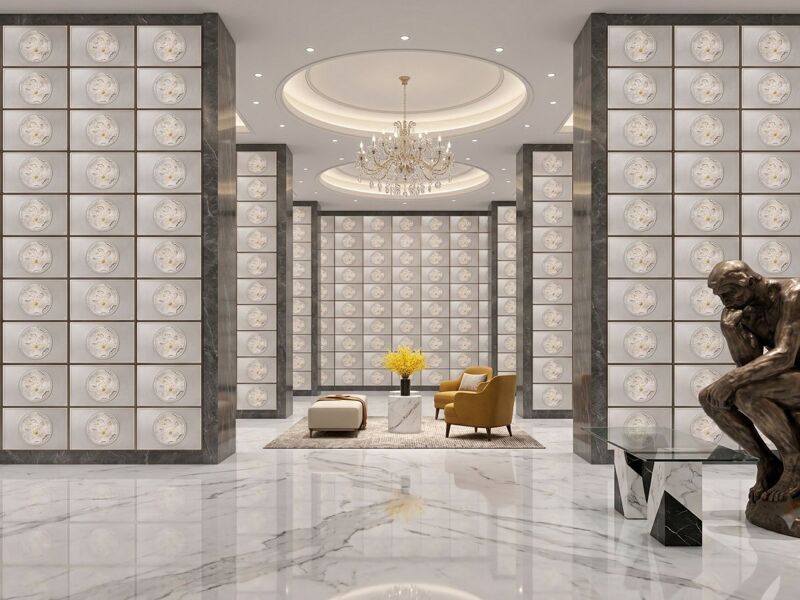
The correct version of the saying is "avoid the bottom two tiers, and do not go to the very top". The good height for a niche is the band where you can see standing, open the door with a raised hand, and have a little distance from the floor. The old saying has its logic but logic only counts once it is translated into dimensions.






