WeChat: (+86)13978873330 Email: 381784025@qq.com

WeChat: (+86)13978873330 Email: 381784025@qq.com

This is the least publicly discussed and most bewildering part of funeral practice. The hospital, the funeral company and the columbarium each say something different and families end up making a decision in their worst few days that will stand for decades. This piece deals only with practice: whether a niche can be used, what a small niche is, and what must be asked in advance.

Most columbaria accept the ashes of infants and fetuses. The difference lies in the niche specification.
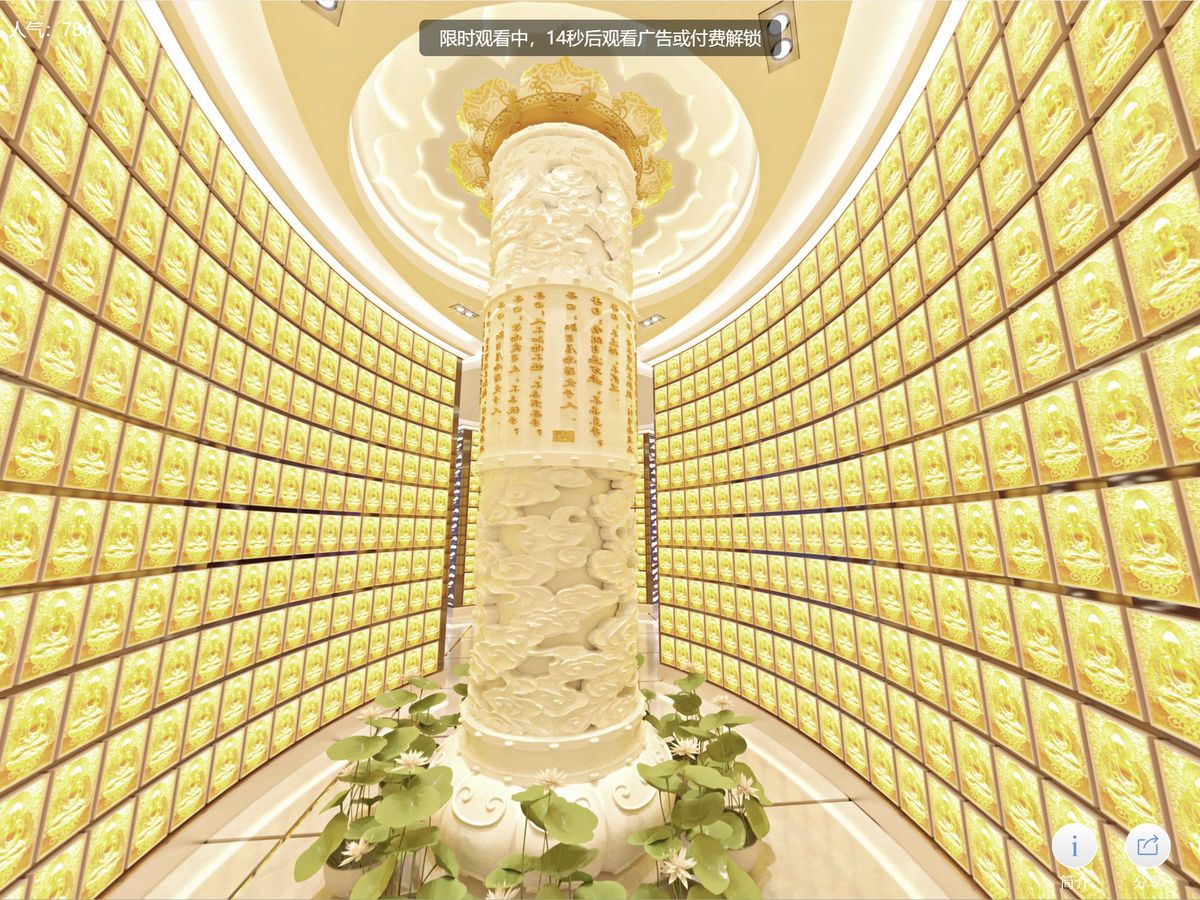
- A standard niche, with an internal clear width of 380–460 mm, is designed for a 200 mm adult urn. Putting an 80 mm urn into it wastes nearly seventy percent of the space while charging the standard price. - A small niche (sometimes called a blessing niche or children's niche) is the small format, typically 150 × 150 × 150 up to 200 × 200 × 200 mm internally, intended for small urns, ash containers and memorial boxes. It generally costs thirty to fifty percent of a standard niche. - A communal area: some temple-type columbaria provide a shared children's area where several are placed together with a separate tablet The cheapest, but with the least individual space.
My advice: if the family wants to be able to visit and later to relocate separately, choose a small niche, not communal placement Relocation from a communal area is extremely difficult because the ashes are intermingled.
Bring a tape measure and check three.
1. Internal clear width. Small urns are commonly 60–100 mm in diameter, 120–140 mm once boxed. Allow 20 mm clearance so 160 mm or more. 2. Clear width of the door opening. On a small niche the door is often narrower than the cavity and opens through a smaller angle, so the actual passage must be measured separately. 3. The tier it sits on. In a columbarium, small niches are often concentrated on lower tiers or in corners. Check whether it is the very bottom tier — ground level has the worst rising damp, and a small urn's seal fails sooner.
The third is the most easily overlooked. Open a children's niche at floor level two years later and mould at the base of the urn is the usual sight.
Quantity of ashes. In an early pregnancy the quantity is very small, sometimes under 20 g. Some columbaria refuse on the grounds that "the quantity is too small to confirm", or require it to be containerised first. Ask in advance whether a small quantity will be accepted; it saves a great deal of shuttling.
Documentation. Practice varies by locality: some places require no cremation certificate for an early pregnancy, only a disposal certificate issued by a medical institution; others require the full procedure This must be asked of the local funeral administration, not taken from the funeral company alone.
Ashes without lawful documentation are not accepted by any properly run columbarium. That is the industry's floor line not the hall being difficult.
Dates. For a child unnamed or under a month old, tradition does not record a death anniversary only the year and month. The birth and death lines on a tablet may read the date followed by the character for "died young", without the hour. This is not slight; it is how tradition handles one who did not reach adulthood.
Forms of address. A tablet does not use "deceased father" or "deceased mother", nor forms containing the word "dead" such as "dead son" or "dead daughter". The usual writing is "son of the X family, named Y", "daughter of the X family, named Y (pet name)", or simply the pet name without a title.
The pet name matters. Many families, twenty years on, locate the niche by that name that only the household knew. The niche number is forgotten; the pet name is not.

A niche is a long-term placement, usually twenty years and more. That raises a practical question: who will visit this niche in future?
What is actually observed: the parents go every year while they are alive; after they pass, the siblings have their own lives and fewer come; by the third generation it is essentially Qingming only.
This is not coldness; it is structural. So two things are worth considering when choosing a location.
- The same hall as the family's other niches. One visit reaches several, without a separate trip. This matters far more than price. - Transport access. Within 500 m of a metro or bus stop guarantees a higher rate of visits twenty years out than "a tranquil setting" does.
The best position in a columbarium is never the most expensive one. It is the one on the way.
One thing is worth saying: this kind of placement is the least suited to a decision made within the first seven days of mourning.
Judgement in early bereavement is impaired; people are easily sold to, easily pushed by a "limited-time offer". A workable approach is to use the hall's short-term deposit first — most offer three months to a year of storage — and settle the paperwork, the location and the family's views before deciding on long-term placement.
Short-term storage is not expensive, usually a few hundred yuan. What those months buy is the time to think clearly, and on this question that is worth paying for.
Q: Can a small niche be exchanged for a standard one later?
A: Most halls permit an exchange, subject to paying the difference and a handling fee, and subject to availability Contracts usually state that exchange is limited to vacancies the hall holds; read that before signing.
Q: Can we have no tablet, only the niche?
A: Yes. A tablet carries the name; it is not a condition of the niche existing. But at least place a metal name plate inside the niche recording the pet name and dates, or in twenty years there will be nothing to identify it by.
Q: The family cannot agree. Can we delay placement?
A: Yes. Short-term storage is the common interim arrangement. Note the expiry date: most halls charge by the day after it, or move the ashes to a communal holding area.

A columbarium does not refuse this kind of placement; the differences are in specification and procedure. Measure the three numbers on a small niche accurately, ask about ash quantity and documentation in advance, and get the titles and the pet name right. What really needs thinking about in advance is not the rules but whether anyone will come in twenty years — so when choosing, prioritise the same hall as the family and transport access over the lowest price. There is no standard answer here, but the decision need not be made in haste.