
WeChat: (+86)13978873330 Email: 381784025@qq.com

WeChat: (+86)13978873330 Email: 381784025@qq.com

I have been asked this on site more than a hundred times A family will take out a sheet of paper with everyone's zodiac animals written on it and ask: "which direction is good for our family?"

My answer is always the same: look at the building first, then the hall, and only then talk about personal direction. Reverse the order and none of it helps.
The first layer is building orientation. Which way the hall building faces is fixed and shared by every niche. You cannot change it when choosing.
The second layer is position within the hall. In one hall, east side west side, near the window inner side — light and humidity differ. This layer you can choose.
The third layer is personal direction. Zodiac and birth chart correspondences to directions belong here.
The problem is that most families start at the third layer while never having looked at the first two. The result: a "auspicious" niche chosen by zodiac that sits on the west-facing side, at the aisle mouth, next to the dehumidifier return grille. Three months after interment regret sets in.
The common version maps the twelve earthly branches onto twelve directions. A person born in the year of the rat should favour north, the horse south, and so on.
That scheme has two preconditions: a clear spatial direction, and a choice.
In a columbarium hall, neither holds.
Direction is not distinct. Within a row, two adjacent niches face exactly the same way There is no "north niche" and "south niche". The only real directional difference is which wall the whole row backs onto.
Choice is limited. There are only so many good positions, and after filtering by zodiac there is often nothing left.
A family has more than one person. Parents and children have different zodiac signs. Whose do you use? In the end you compromise.
So my view: zodiac direction can be a preference applied at the last step, never a filter applied at the first.
The order I give families:
First, who will visit. Who comes most? If elders come often, choose a lower floor and an aisle-side position. If younger people come often, choose a middle tier somewhere quiet.
Second, humidity and daylight. Ground-floor niches need protection against rising moisture; west-facing niches against ageing; exterior-wall niches need checking for a back cavity.
Third, circulation and space. Can people stand in front, is the aisle wide is the niche easy to find.
Fourth and last, directional preference. Among the candidates that already satisfy the first three, pick one whose direction an elder approves of. At that point the choice is a refinement, not a life-or-death judgement.
The advantage of this order: even if the ideal direction is not available, the niche still works. Reverse it, and no matter how accurate the direction, a bad position is still bad.
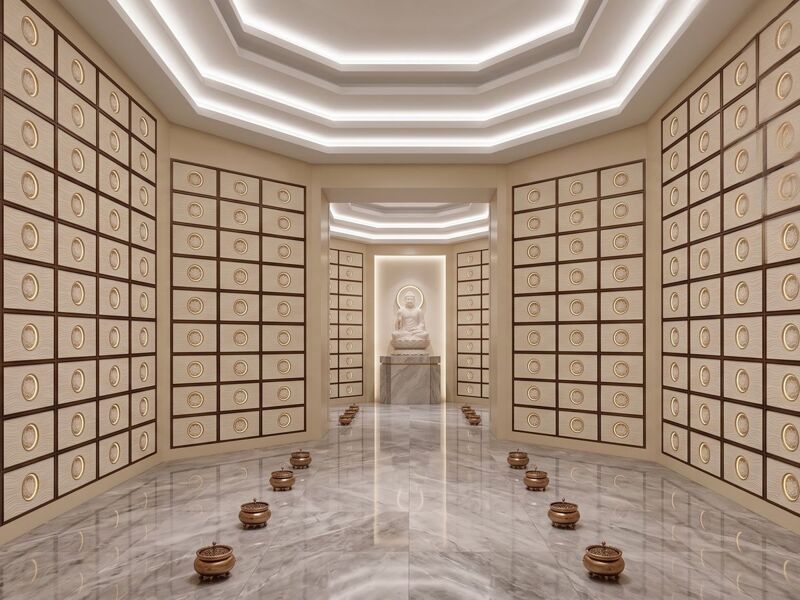
Do not push back head-on. Do two things.
One: narrow the range to three first. All three must satisfy the practical conditions, then let the elder choose among the three by direction. The elder feels involved, and you avoid a niche that cannot be used.
Two: make "direction" concrete. What many elders mean by "facing south" is actually "I want good light, I want it bright". Taking them to see the daylight side works better than arguing over a direction table.
The most ideal case I have seen: a family brought an elderly gentleman who insisted on south-facing. We walked him past three niches, and he chose an east-facing one — because "the morning sun is warm". What he actually wanted was not south. It was sunlight.
One confusion worth clearing up: choosing a niche and choosing an auspicious interment date are separate matters.
Choosing a niche is about spatial conditions — you can look anytime, compare, go back repeatedly. Choosing an interment date is about the calendar, a ritual matter, and can be consulted separately.
Some salespeople merge the two: "today is an auspicious day, sign now and it is settled." That is a pitch. The niche position will not run away because of the date, but the price will rise because of your haste.
Q: How is a niche's sitting orientation determined?
By the orientation of the building's main entrance, not by an individual niche door. All niches in one hall share it.
Q: Does zodiac incompatibility have any effect?
That is a matter of custom with no unified standard and interpretations vary by region. Treat it as a preference, not a hard condition.
Q: Is it bad if the family does not believe in any of this?
No. The core of a niche is that it is clean, dry, accessible and easy to find Those four have nothing to do with belief.
Q: Can we bring in a master to advise?
Yes, but first narrow it to three candidates yourself, then have them looked at, so you are not led to an unsuitable niche.
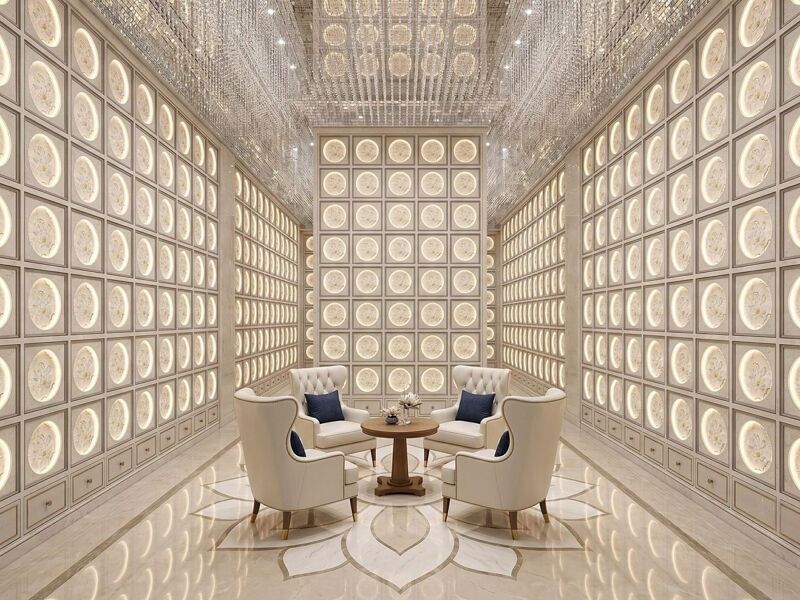
Should zodiac and birth charts influence niche choice? They can, but they belong last. A niche's first property is "usable for thirty years"; its second is "does it feel right". Get the order right and the family neither chooses wrong nor argues with the elders — because the practical choice is usually also the reassuring one.






