WeChat: (+86)13978873330 Email: 381784025@qq.com

WeChat: (+86)13978873330 Email: 381784025@qq.com

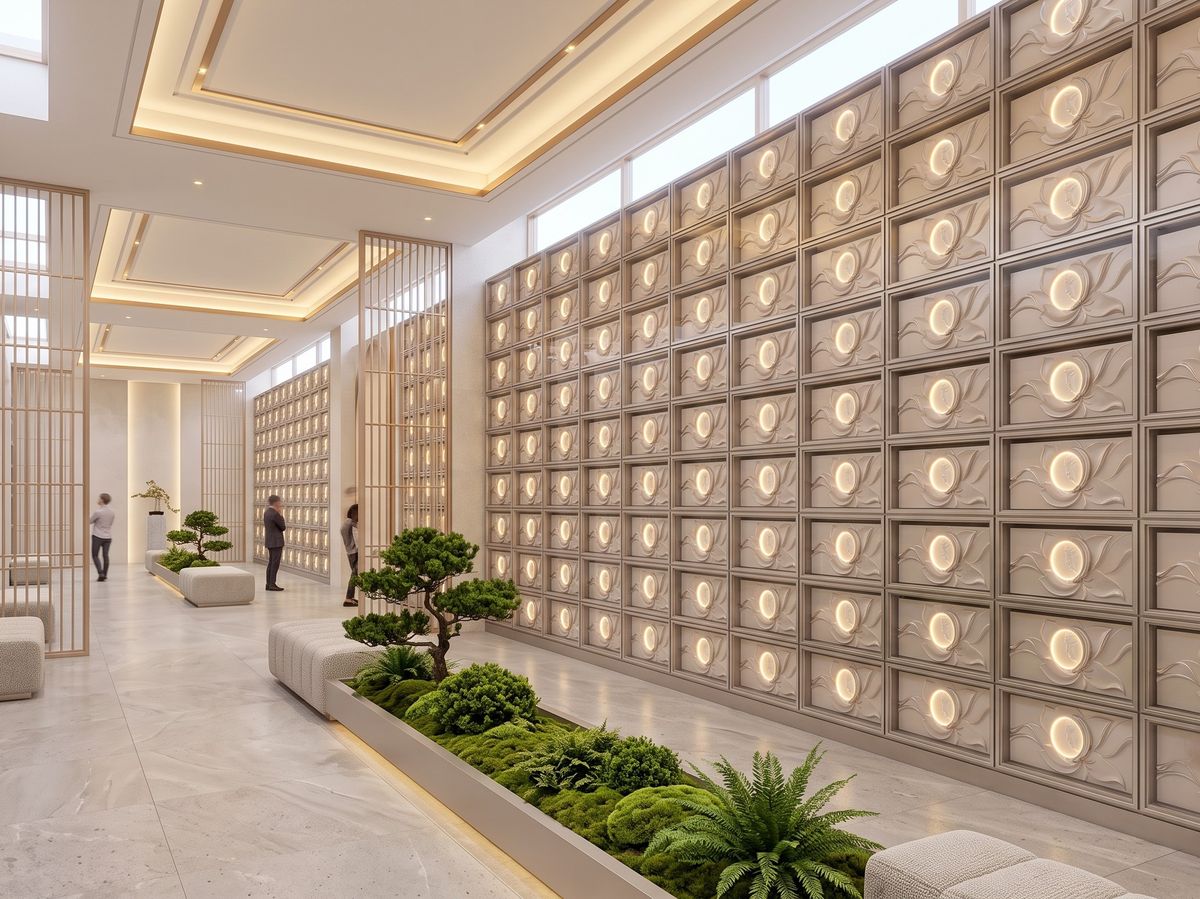
A niche near the window often prices 15 to 30 per cent above one on the inner side The sales reason: "better light, brighter, feels different."
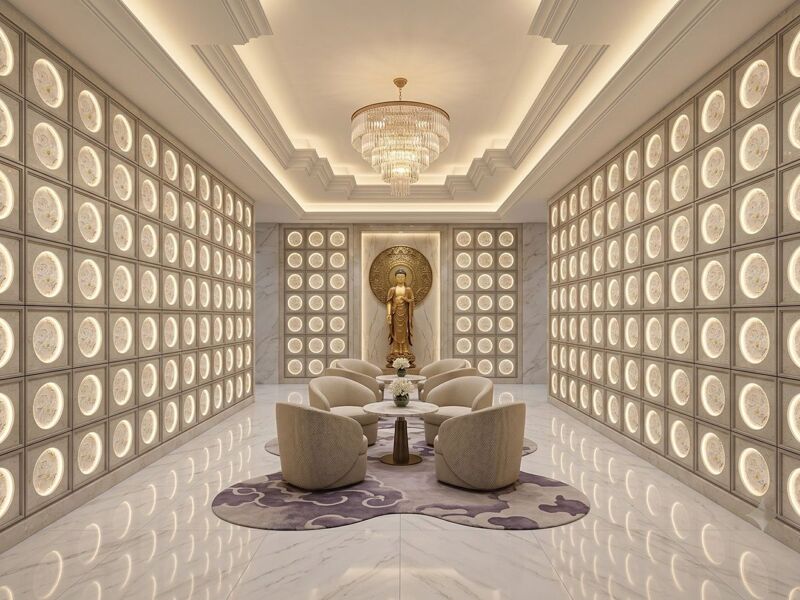
Half of that reason holds. Daylight really is a genuine difference but the daylight face has problems of its own.
The numbers first. In the same hall a niche on the daylight face reads 300 to 600 lux in daytime; an inner niche relying on artificial light reads mostly 150 to 250 lux.
The difference shows up in three things.
Door panel colour is legible. At low illuminance the difference between dark and light panels flattens out, and families perceive "a wall of grey".
Number plates are easier to read. Plates on the daylight face reflect less and remain legible from further away.
The urn face does not go dull. Without an internal strip light, daylight is the only source.
So half of the daylight premium is real — what it buys is legibility.
First, ultraviolet and direct sun. Direct sunlight accelerates coating ageing A laminated aluminium composite panel under direct sun visibly fades in five to eight years; the same batch on a shaded face stays stable for ten.
Second, temperature differential and condensation. A niche on an exterior wall meets a cold internal surface in winter, and moisture in the hall condenses there If the back panel is against the wall with no cavity the problem is more pronounced.
Third, west sun. On a west-facing daylight face, sun lands from three to four in the afternoon and panel surface temperature can run 8 to 12 degrees above ambient. That differential is not good for the sealing material on an urn, particularly wax seals.
So the orientation matters: east and north are better than west. South gives ample daylight but needs shading against summer sun.
First, is there external shading? Only a daylight face with an overhang, louvres or Low-E glass justifies a premium.
Second, is there a cavity behind the panel? For a niche on an exterior wall keeping the back panel 50 mm or more off the wall sharply reduces condensation risk.
Third, is there supplementary lighting? If inner niches already have strip lighting bringing illuminance above 200 lux, the daylight face's relative advantage shrinks and the premium should fall.
Measured against those three, my judgement: a daylight premium within 10 to 15 per cent is acceptable; above 20 per cent is not worth it.
If you choose an inner niche, three ways to add light.
A strip inside the niche. Mounted inside the door head washing downward, 3000 K, enough brightness on the urn face without dazzling the eye.
Plate lighting. A narrow-beam spot on the number plate for long-distance identification.
Aisles one step brighter. Raising aisle illuminance from 100 to 150 lux changes the overall impression noticeably.
The combined cost of those three is far below the daylight premium. That is one reason I recommend "spend on position, add specification later".
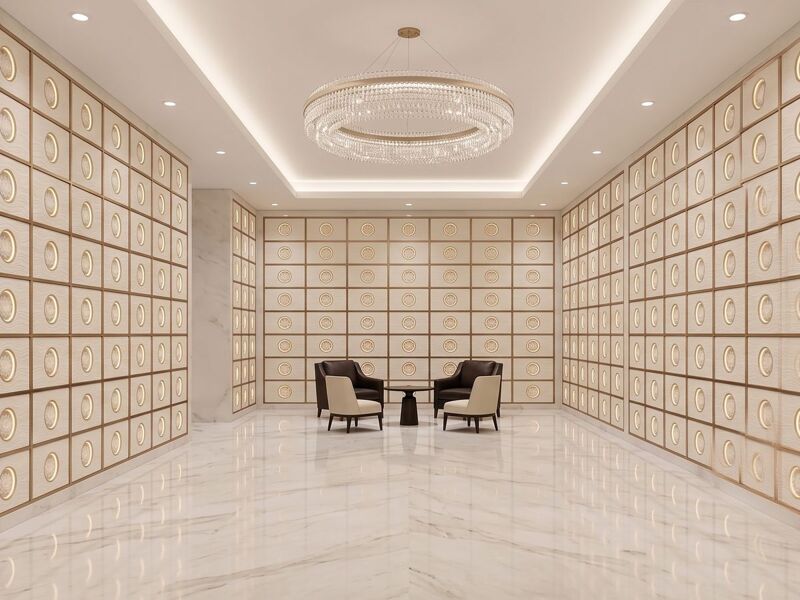
A phone is enough.
Measure at ten in the morning and four in the afternoon. Point a light meter app at the centre of the door panel and record the value. A difference above 200 lux means the niche is heavily affected by direct sun.
Check the window-to-floor ratio. Daylight area divided by floor area: 1:6 to 1:8 is reasonable; higher brings west glare and dazzle.
Check for shading devices. Overhang depth louvre angle and glass type together determine direct sun intensity.
- Measure illuminance inside the niche with the lights off; below 50 lux means total dependence on artificial light. - Check the west-facing wall; after four in the afternoon its temperature is clearly above other walls. - Touch the door panel; positions with large temperature swings condense first. - If a well-lit niche carries a premium above twenty per cent, recalculate. - Ultraviolet at window-side niches fades photographs; a filter film is needed. - Curtains or filter film on a daylight-face niche need replacing every three years. - East-facing niches have hard morning light; west-facing ones are hot in the afternoon. - Inner niches supplemented by strip lighting should match the daylight face's colour temperature.
Q: Are daylight-face niches damper?
Not necessarily. An exterior wall condenses more easily, but with a back cavity and wall insulation it can be drier than an inner niche, because ventilation is better.
Q: Can a west-facing niche be chosen?
Yes, but confirm external shading. Without it, door panels age visibly faster.
Q: Will the daylight premium be recovered later?
On resale the buyer recognises "near the window" but will not pay the original premium in full.
Q: Is a windowless hall a bad sign?
Not necessarily. A windowless hall controls humidity better, and full artificial lighting can produce more even light. What matters is whether illuminance and colour temperature are done well.
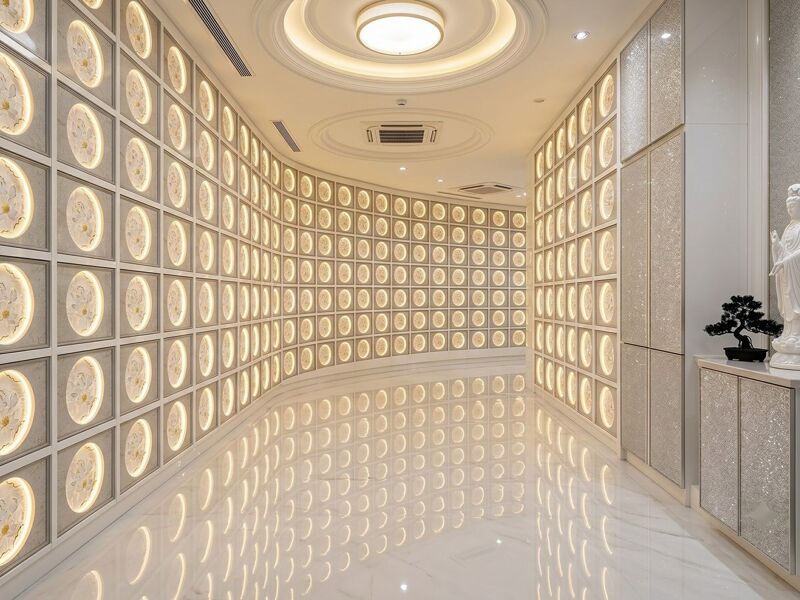
Whether a daylight-side niche is worth a premium depends on whether that daylight face has been properly handled. With shading, a cavity and supplementary lighting, 10 to 15 per cent buys legibility. Without those, with nothing but a window, the premium buys a feeling. A niche is used for decades. Being able to see clearly is more solid than feeling good.