WeChat: (+86)13978873330 Email: 381784025@qq.com

WeChat: (+86)13978873330 Email: 381784025@qq.com

Six cells are not one niche enlarged six times. They are six niches organised. With the same six occupants, a 3 × 2 arrangement and a 6 × 1 arrangement occupy roughly the same floor area, but the walking distance differs by a factor of two, the door weight by a factor of three, and the price can differ by twenty per cent. The real design difficulty in a family niche is not fitting everything in. It is whether one opening can serve all of them.

The most common module for a family niche is 600 wide × 560 deep × 500 high, one cell per urn, with an independent door and number.
It is a size up from a single niche for three reasons. Family niches more often hold stone urns of 260 to 300 mm diameter, needing more hand clearance Grave goods — clothing, letters, prayer beads — need 560 mm of depth to avoid crowding. And 500 mm of clear height accommodates an urn with a base without laying it on its side.
On that module, six cells become 3 × 2 (three columns, two rows) or 6 × 1 (six in a row), or 2 × 3. Which one to choose depends on column spacing and on visiting habits.
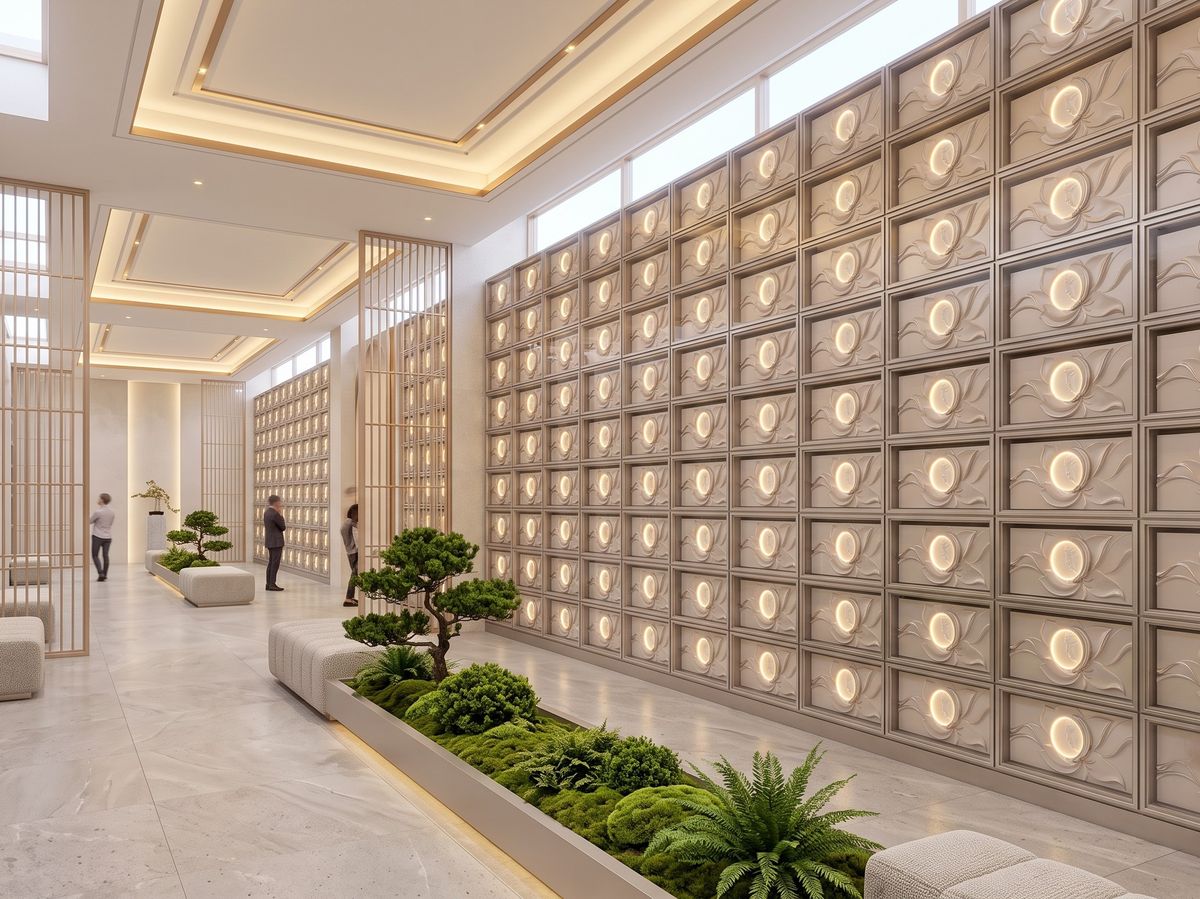
3 × 2 is two rows of three, six niches forming a face of roughly 1800 × 1000. The advantage is compactness: the family can stand within a metre and see all six. If built as a single large door shared by all six cells, one opening serves the whole commemoration, with the shortest route.
The cost is the door. A shared leaf close to 1800 × 1000, even in 0.8 mm sheet, weighs over ten kilograms and needs double hinges plus a support; you must hold it while opening and closing. The larger the panel the more it warps: mid-span sag appears after three to five years and the gap between frame and door widens from 2 mm to 4 mm, letting dust in.
A compromise is "two doors, three cells each" — half the weight, two openings, still a short route. I generally recommend this for family niches.
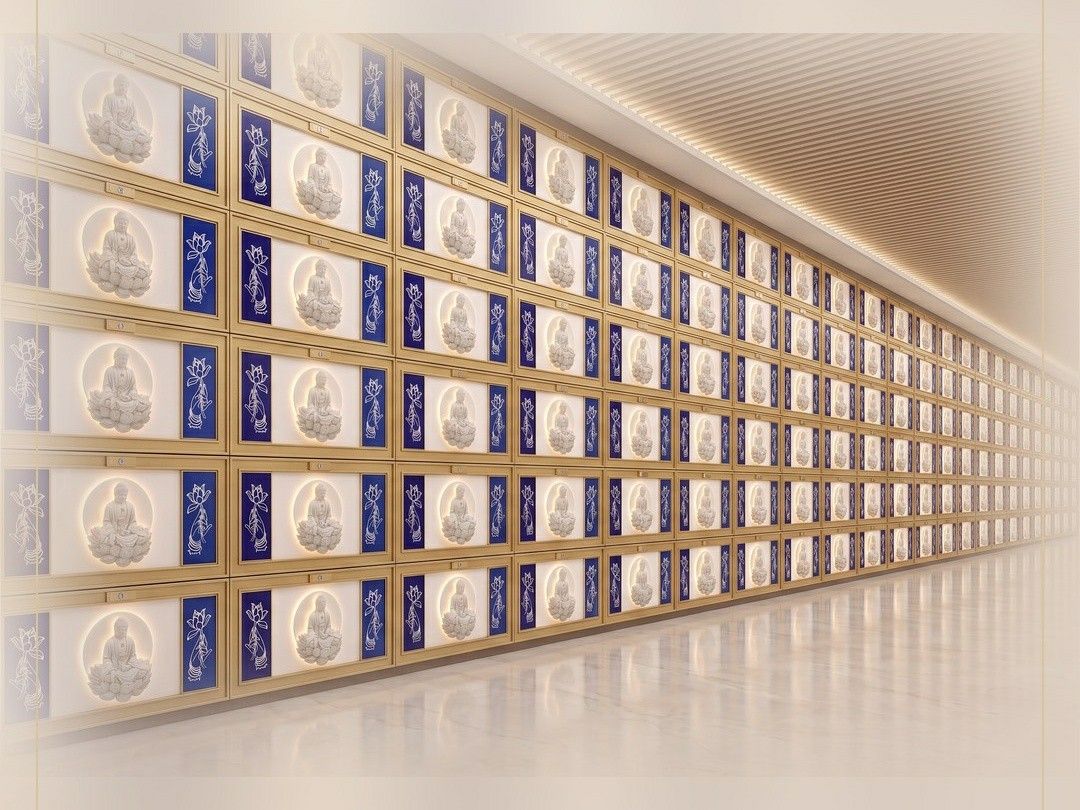
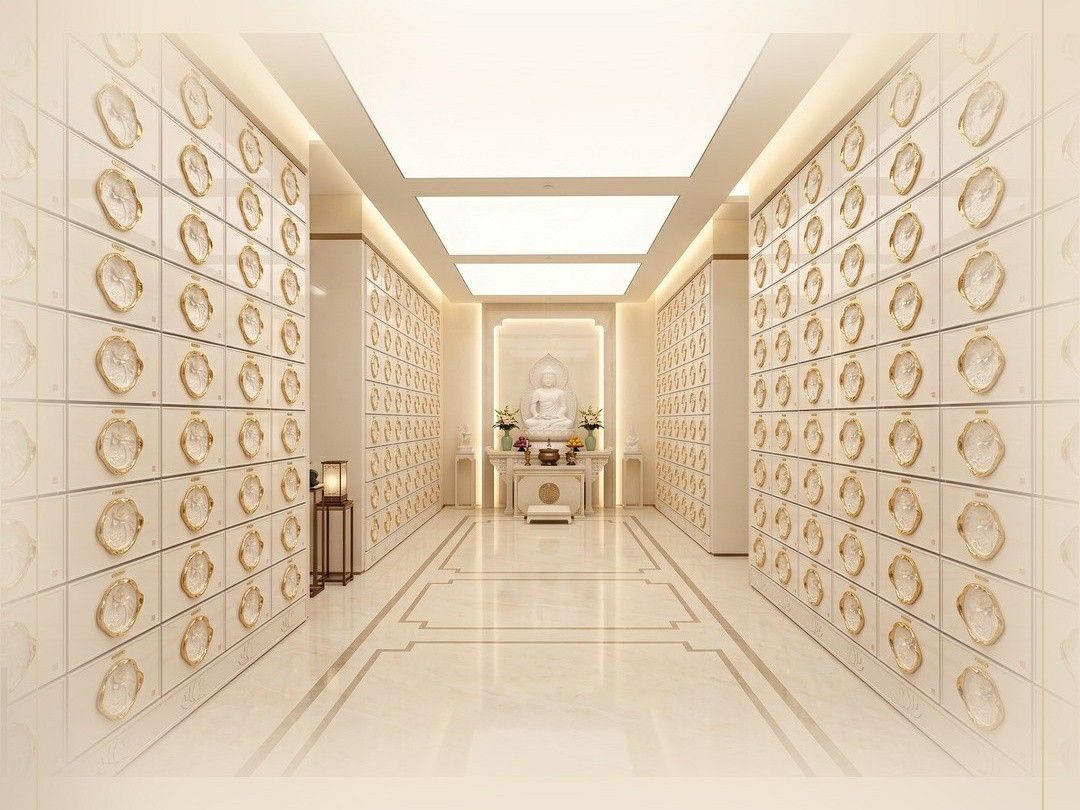
6 × 1 is six niches in a horizontal row about 2400 wide. Each cell has its own door and number, so it is absolutely clear which cell belongs to whom, and repairing one does not affect the others. Structurally the spans are short, so no stiffening is needed.
The cost is circulation During a visit, walking from left to right is 2.4 m; with a commemoration platform in front, the round trip becomes five metres. For an elderly visitor, with bending and rising added, half of a twenty-minute visit is spent moving. Most complaints about "family niches arranged in a row" are not about looks. They are about walking.
First, load. Six urns at 8 kg each plus grave goods puts a family group at 60 to 80 kg total. In a 3 × 2, the upper row's weight travels through the uprights to the floor, so upright wall thickness must not be under 1.8 mm and the base needs transverse stiffening.
Second, door weight. A single leaf over 0.6 m² must be designed with double hinges; over 1 m² it needs a centre support or a split leaf. This is inconspicuous on drawings, and you only discover after installation that the door sags on its own.
Third, clear height. Family niches often place urns on the lower level and mementoes above. The upper level needs over 350 mm of clear height to take a photograph frame and tablet. Total group height reaches 1200 to 1400, and anything above 1.5 m starts to need a ladder.
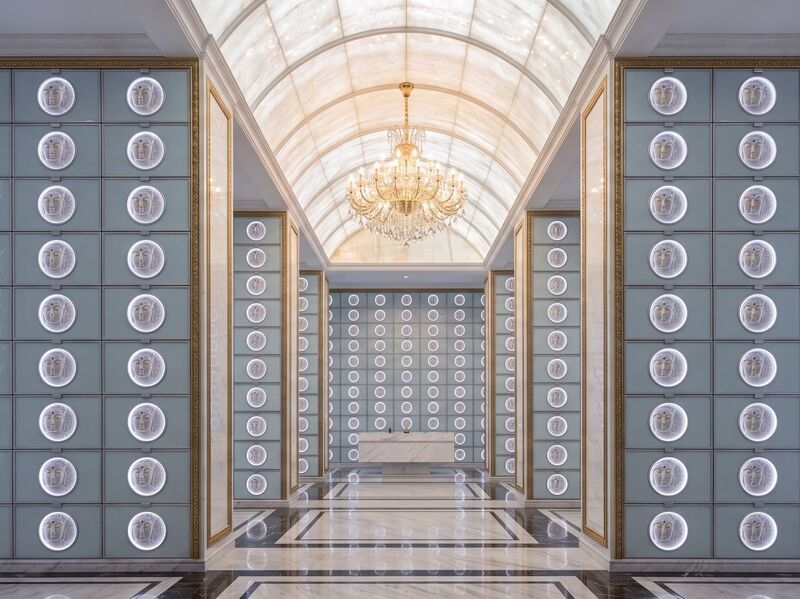
This is the most practical problem with family niches. Many families buy two cells first and add more ten years later only to find the group is sold out and they must take another row. Once numbering is fixed, a different row means a different place to visit.
So ask three things when buying: how many cells remain in the group; whether cells can be reserved (most facilities allow one or two years against a small holding fee); and whether cross-group purchases can be linked by annotation in the numbering. The third is usually impossible, but worth asking.
A family niche is not unit price times six. The common formula is base niche price × number of cells × position coefficient, less a combination discount, usually 5 to 12 per cent.
What really drives the spread is position. Within one hall a family niche on the view face or a low tier can run 30 to 50 per cent above a corner position of the same size.
My advice: rather than negotiating two points on the discount, write three things into the contract — group connectivity, shared door, and reservability. A niche is a matter of decades; the convenience of the grouping is worth more than that 5 per cent.
Q: Can I buy four cells of six and leave two for later?
Yes, but confirm the remaining cells and the reservation rules. Without written reservation, a verbal promise counts for nothing.
Q: Which holds value better, 3 × 2 or 6 × 1?
6 × 1 resells more easily because it can be split into independent niches; 3 × 2 is more usable because the route is short. Buy 3 × 2 for your own use, 6 × 1 if resale matters.
Q: Will a large door warp?
Yes. A leaf over 0.6 m² needs double hinges; over 1 m² needs additional support. You will not see it in the first year; by the third the gap has widened.
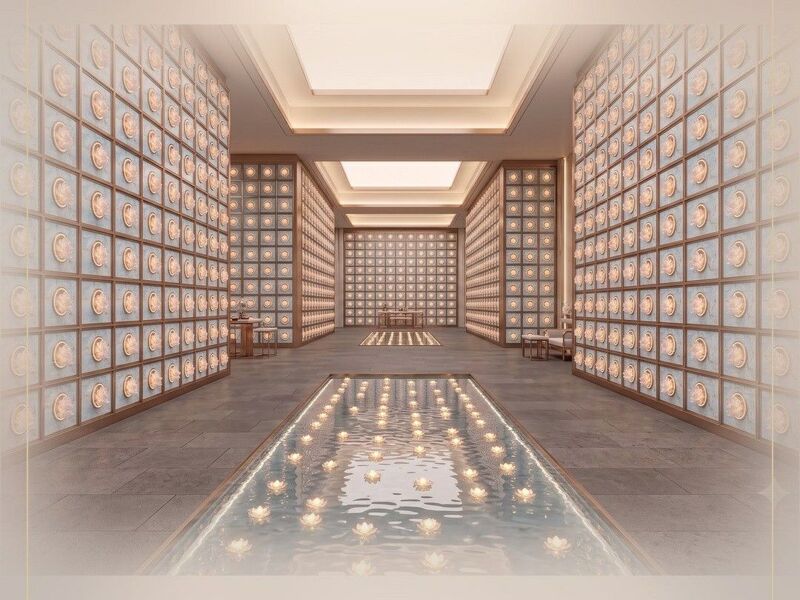
Arranging a family niche is a trade-off between two accounts: circulation and structure. 3 × 2 saves walking but loads the door and needs stiffening; 6 × 1 saves structure but lengthens the route. At family scale, what is being tested is not capacity but whether it can be done in one visit. Before laying it out settle one question: will these six arrive together, or in stages.