WeChat: (+86)13978873330 Email: 381784025@qq.com

WeChat: (+86)13978873330 Email: 381784025@qq.com

In paying respects, the longest part is not offering incense It is finding the niche.

Someone unfamiliar with the numbering system takes an average of five to ten minutes to find column so-and-so, tier so-and-so among several hundred or several thousand niches. On Qingming day, several thousand people are standing in the aisles looking up for numbers at the same time, and that single action blocks the aisles outright. Many people assume Qingming is congested because there are too many people. It is actually because everyone is standing still, looking up.
Signage is the cheapest item in a columbarium and the one most easily done wrong.
The first is inconsistent numbering rules. Which end does column numbering start from? Is tier counting bottom-up or top-down? In one hall, sales uses one convention management uses another, and the family hears a third. Without a consistent rule, a number is just a string of digits, not a coordinate.
The second is inconsistent number plate positions. Some are at the top left of the door panel some at the bottom right, some stuck on the frame. Human gaze follows a fixed habit: look at the centre first when you look up, then to the upper left. With number plates jumping around, finding a niche becomes a scanning exercise.
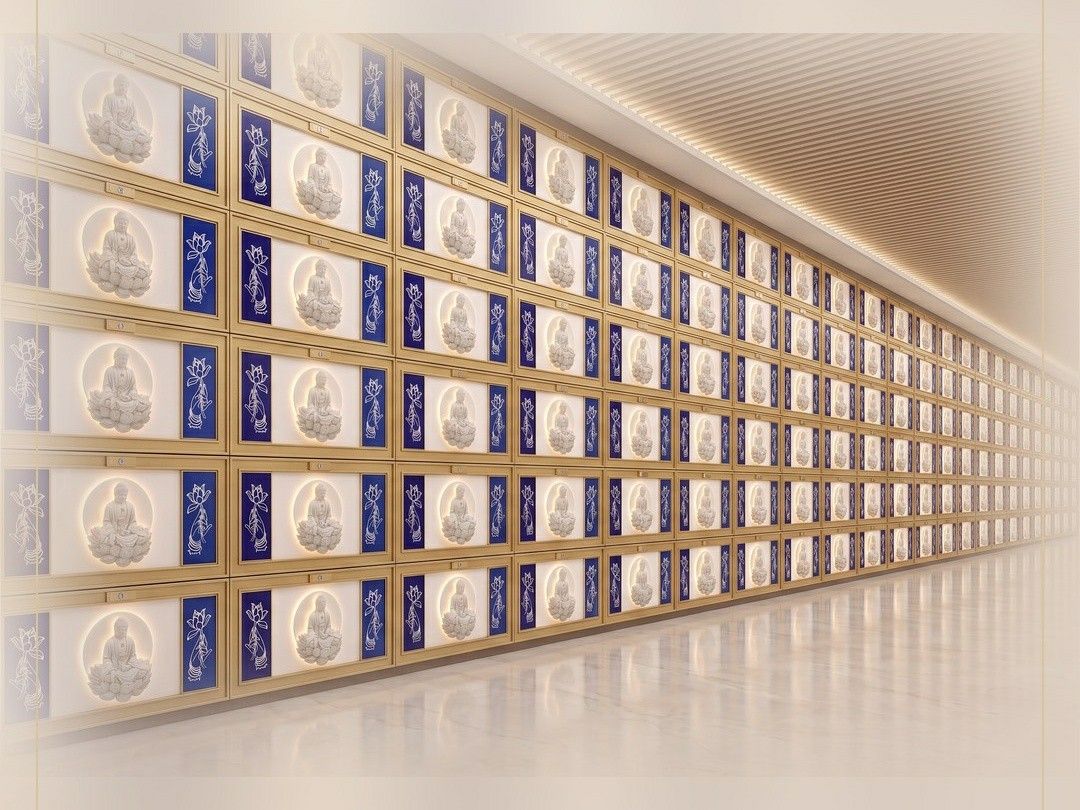
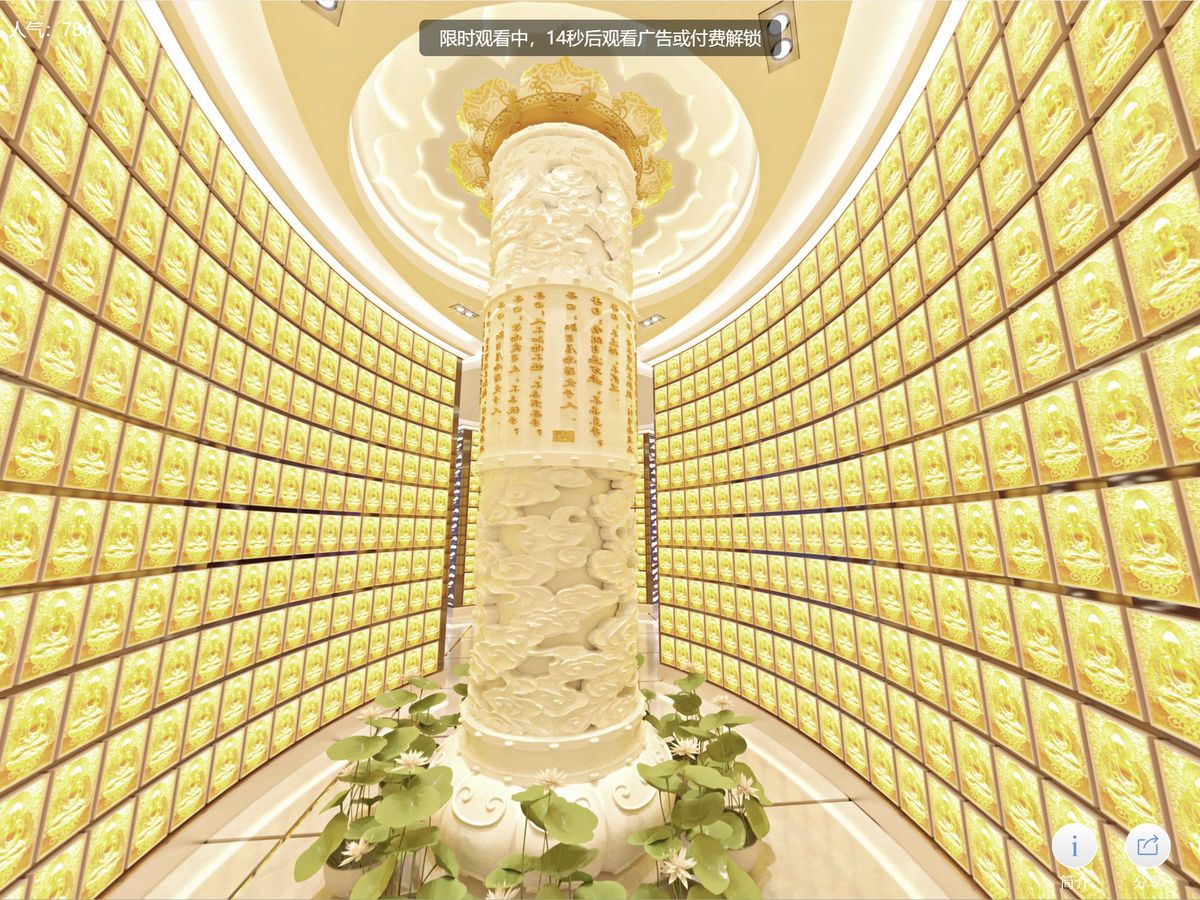
The third is the absence of zoning. Several hundred niches in one continuous run, with no zones, no segments, no nodes. Walking in is like standing in front of a bookshelf — you know you are at the bookshelf, but not which shelf.
I recommend a four-part scheme: zone — column — position — tier.
Zones named by orientation or entrance order (A, B, C, or East, West). Columns numbered clockwise from the entrance. Positions within a column from left to right Tiers from the bottom up.
What matters is not the scheme itself but that the whole project uses only one. Sales, drawings, plates and the database must agree in all four places. The moment a columbarium has two versions of its numbering, all downstream management goes with it.
Signage is not one plate. It is three scales of thing.
Long scale (ten metres away): zones. Zone signs should hang at the end of an aisle at 1.8–2.2 m, with type large enough to read from twenty metres. This layer answers "which zone am I in".
Middle scale (within three metres): columns. Column numbers go on the aisle floor or above the aisle, one per column, repeated — floor lettering works better than overhead signs, because people look down when they walk. This layer answers "which end of this column am I at".
Close scale (within one metre): positions. The niche number plate goes on the door panel, roughly 40 × 25 mm, gold ground with red characters, consistently at the top left, and movable to cover the lock hole. A niche number plate carries two functions at once — finding the niche and hiding the lock hole. This is one of the better domestic practices.
Miss any one of the three scales and people have to walk the route twice.
First, the typeface. Use monospaced numerals, with 0 and O clearly distinguishable, and 1 and 7 clearly distinguishable. The hardest characters to read in niche numbering are 1, 7 and 0, because at one or two metres an older person cannot resolve fine detail.
Second, movable but not falling off. A sliding plate with light damping holds at the mid position without a hand to keep it there. That feel decides whether a family member gives it "one easy push" or "fiddles with it for ages".

Many columbaria now install directory kiosks, QR codes and mini-programs. The direction is right, but three preconditions apply:
Type must be large — result text no smaller than 24 point. The entry point must be simple — enter a niche number, get a location; do not make families register first. The route must be drawn — a path from where they stand to the target niche, not just a coordinate on screen.
The most overlooked user in a columbarium is the half of the population that does not use a smartphone. If the digital directory exists only inside a mini-program, that door is closed to them.
The most effective method is often the most crude. Put a stack of printed zone maps at the entrance — A4, showing column numbers and direction for every aisle. A family takes one and reads it as they walk.
It costs a few fen per sheet and works better than a kiosk, because it needs no learning and it does not break down.
Q: Can numbering exist only in the system, not on the door panel?
No. Paying respects happens in front of the niche, not in front of a screen. Niche numbering must be written somewhere it can be seen.
Q: Should the tablet zone and the niche zone use separate numbering?
Yes, and they should look obviously different — numerals for niches, letters for tablets for example. The users of those two zones are often the same family, and mixed numbering guarantees people go wrong.
Q: An old columbarium has chaotic numbering. Can it be renumbered?
Yes, but it must be done in one operation with a public notice. The cost of renumbering is not in the plates, it is in synchronising records — contract, database and the documents families hold must all be updated together, or old and new numbering will coexist for years.

Signage in a columbarium is the technology that lets a person get there by themselves. Three scales visible — zone, column, position; one numbering convention that can be stated clearly; one consistent plate position. Do that and finding time drops from ten minutes to two. The dignity of a columbarium is sometimes not about how beautiful it is. It is about not having to ask anyone.