WeChat: (+86)13978873330 Email: 381784025@qq.com

WeChat: (+86)13978873330 Email: 381784025@qq.com

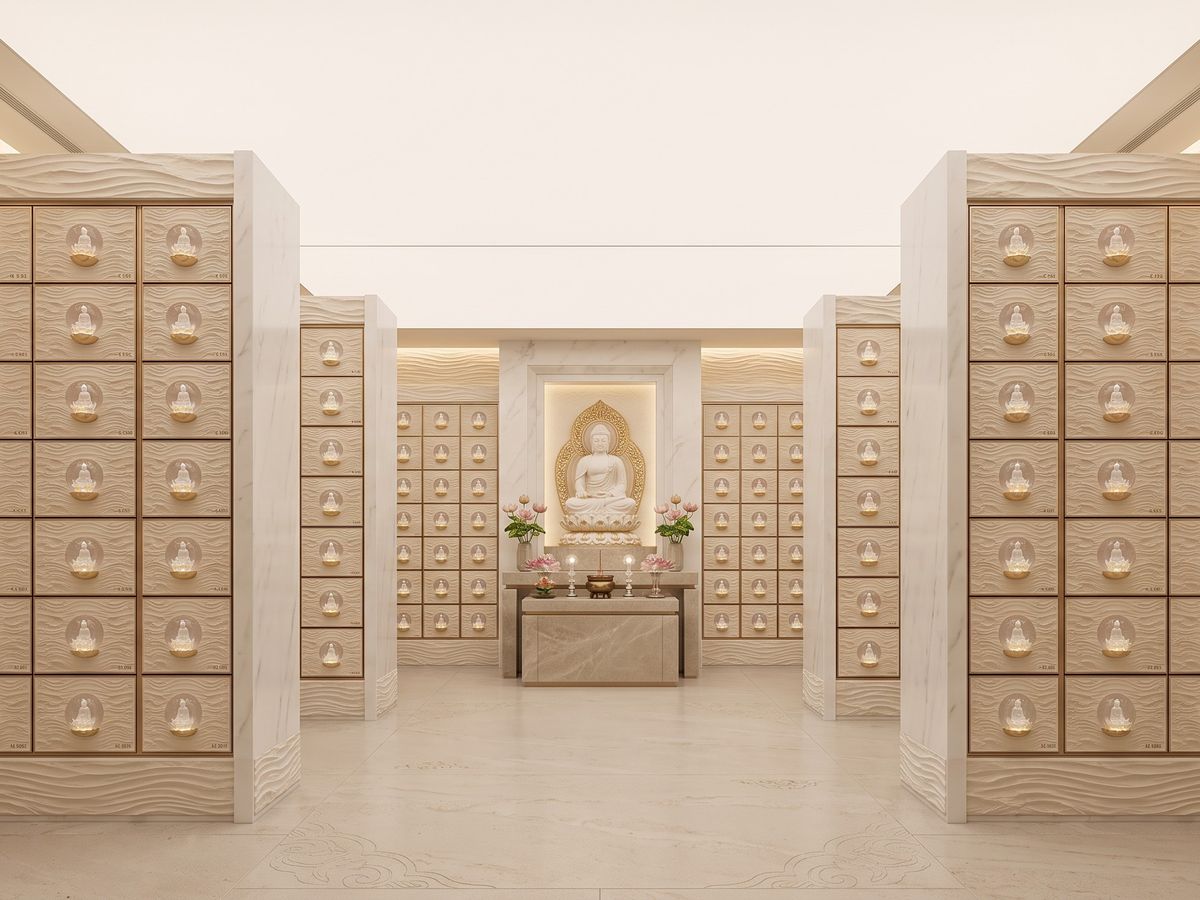
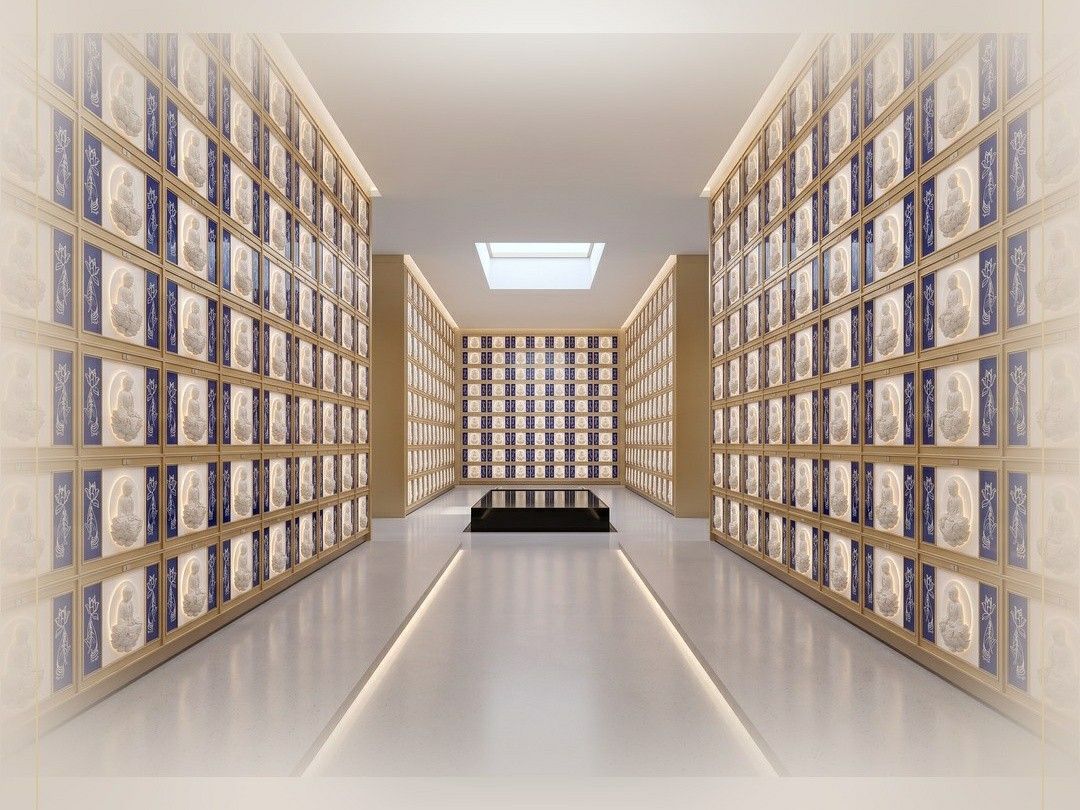
Timber, stone, metal — three families are enough for a columbarium. Every additional family adds a layer of visual noise. The difficult part is not choosing materials but controlling proportion and reflectivity; those two decide whether the space is quiet or noisy.
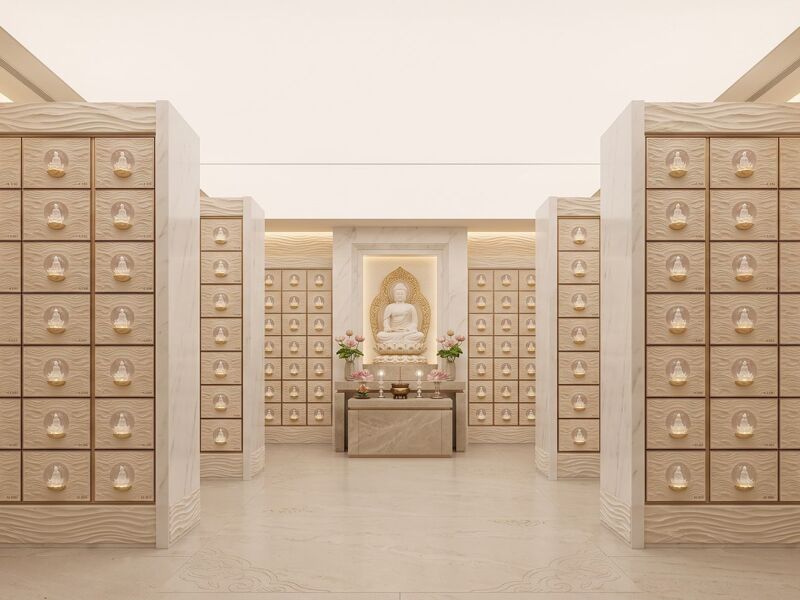
That is a workable starting point. Stone for floors and wall bases, timber where hands actually go, metal for the frame and details, and the remaining tenth for paint, fabric and glass.
The category most likely to run away in a columbarium is "other." Glass partitions, mirror acrylic upholstery, decorative art — none of them much on their own, and together they fill the space.
Once reflective area exceeds a third of the total finish people see their own reflections everywhere as they move and the space flickers.
Reflectivity in a columbarium comes from four sources: polished stone, mirror stainless, glass, and gloss paint. Keep the four together under one third Practically, keep the eye-level band (0.9–1.8 m) matte, and push reflective materials to the floor or high up.
Water absorption no higher than 0.5%, slip rating R10, Mohs hardness 6 or above. That set of parameters survives hundreds of people a day and daily mopping in a columbarium.
Do not use polished marble. Efflorescence in marble is inevitable — moisture from the cement substrate rises and crystallises as white salts on the surface; wipe it away and it comes back, and in a few years the whole field goes dull Once a columbarium floor goes dull, no amount of cleaning brings it back.
Handrails, door panels, shrine cabinets. Those are what people actually touch, and that is where timber's warmth is worth most.
Do not use timber flooring (columbarium cleaning is wet, and a timber floor is finished within two years), do not veneer a whole wall in timber (a twenty-metre timber wall goes heavy under lights), and do not use timber on the ceiling (fire and maintenance both become awkward).
Keep timber moisture content at 8–12%, and let it stand on site for 48 hours before installation so it acclimatises.
Use 304 stainless or aluminium with a brushed or bead-blasted finish, not mirror.
The problem with mirror stainless in a columbarium is not vulgarity but distortion. A large mirror surface stretches reflections; a standing person sees themselves elongated, which is deeply odd. And a single fingerprint on mirror is glaringly obvious.
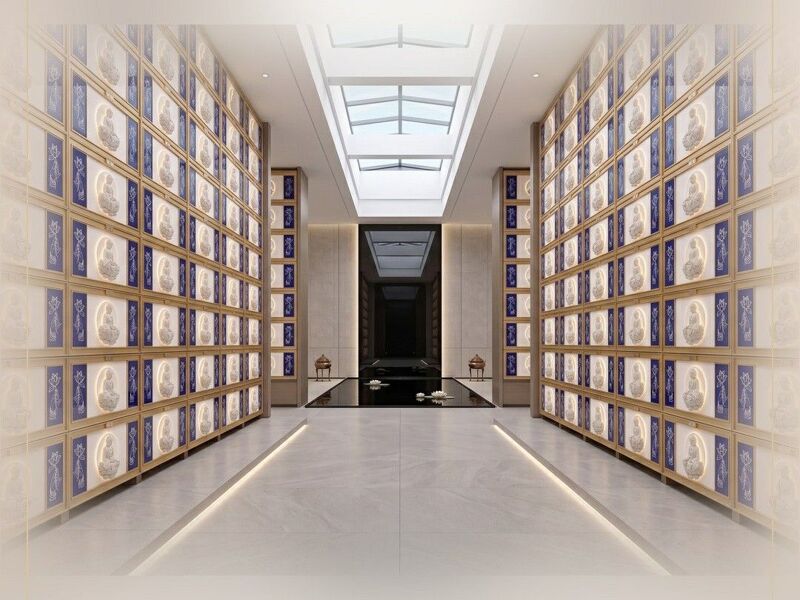
The niche carcass material and the columbarium finishes belong to two separate logics. The carcass is a product: dimensional accuracy, sealing, durability. The finish is a space: tone and touch. The two need not match in material or colour.
The usual approach is a galvanised steel or aluminium carcass with a timber-grain or stone-grain film. If the columbarium wall is real stone, do not use a fake stone-grain panel — real and imitation side by side are obvious at a glance.
At the junction between carcass and wall, leave a 20 mm recess: it hides services and it hides dust. Do this properly and the whole run of niches reads noticeably more disciplined.
Where different materials meet, leave a 5 mm recessed joint, sealed or trimmed. Never butt them hard — a hard joint cracks with temperature movement, and once cracked the repair silicone never matches.
Stone to timber, timber to metal, floor to wall: these three most need a shadow gap. Eighty percent of the refinement in a columbarium comes from how these joints are handled.
Polished marble floor, mirror stainless column cladding, plus a glass partition. Each looks fine alone; together it is a hotel lobby, and you are chased by your own reflection as you walk.
What a columbarium needs is not "premium" but "settled." The goal of a material palette is to put attention on the positions and the people, not on the materials.
Matte is easier to clean than gloss, counter-intuitively: a gloss floor in a columbarium looks wipeable but leaves water marks the moment you wipe it and needs polishing to restore. Matte takes a neutral cleaner and a mop.
Columbarium cleaning runs two to three times a day; choose the wrong material and five years of labour exceeds the difference in material price. Almost nobody counts this at specification stage, but it is a real cost.
Q: Can artificial stone replace natural stone?
A: Not for floors (insufficient abrasion resistance); yes for counters Artificial stone has controllable colour variation and is a good choice for columbarium counters.
Q: Does timber need fire treatment?
A: Mandatory. A columbarium is an assembly occupancy; timber veneer must reach Class B1 and its area is restricted.
Q: Will the metal rust?
A: 304 will not in a dry environment. But the chlorine-based disinfectants common in columbaria corrode stainless, so rinse with clean water after wiping.
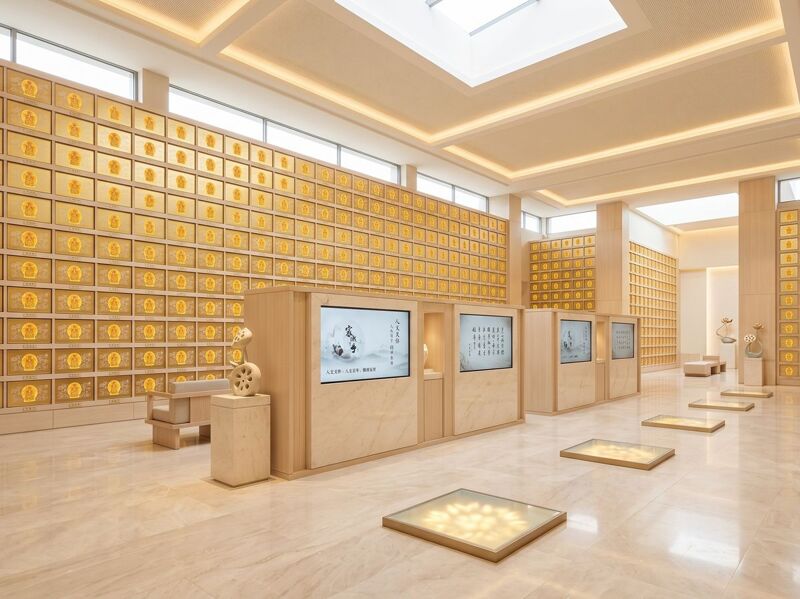
Columbarium material mix: stone 40, timber 30, metal 20, other 10, reflective surfaces under one third, stone absorption below 0.5%, timber in three places only, metal brushed, 5 mm shadow gaps at junctions. The quality of a columbarium is not about how expensive the materials are but how few — three families done thoroughly feels more like somewhere you could stay a while than eight families piled up.