WeChat: (+86)13978873330 Email: 381784025@qq.com

WeChat: (+86)13978873330 Email: 381784025@qq.com

A columbarium floor has to satisfy three things at once: slip resistance, stain resistance, and no glare. Only two types do all three — matte granite and homogeneous porcelain tile. Everything else loses on at least one of the three.
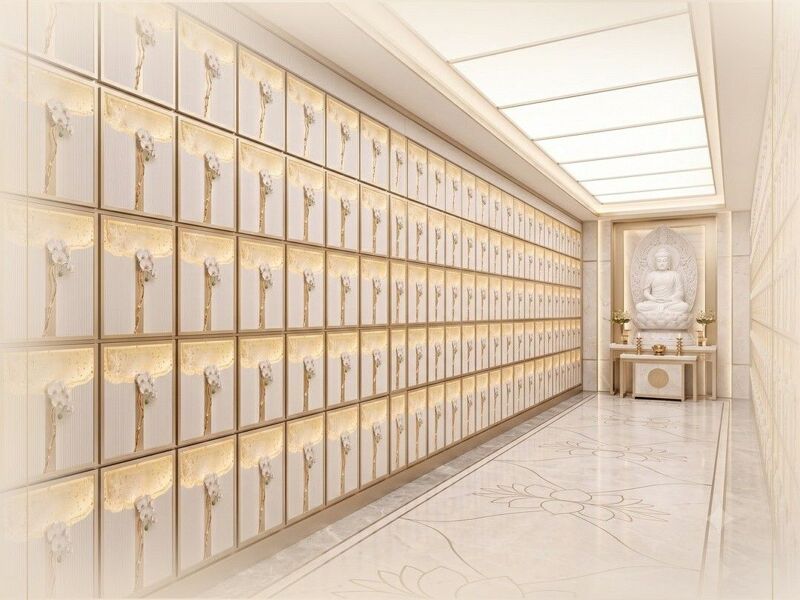
Matte granite: water absorption 0.2–0.5%, Mohs hardness 6–7, compressive strength above 100 MPa. Use it in main aisles; it will last ten years without replacement.
Homogeneous porcelain tile: water absorption below 0.1%, full body (not a glazed surface layer), abrasion resistance above 6,000 revolutions Half the cost and the most commonly used option.
What both share is being matte — no glare, shoe prints do not show, and no water marks after mopping.
Slip rating R10, dry friction coefficient no less than 0.6, wet no less than 0.5. These three are measurable at columbarium handover, not concepts.
Mohs hardness 6 or above so nails and grit cannot scratch it. A scratch in a columbarium floor is irreversible — dust collects in it and it gets dirtier the more you clean.
Water absorption below 0.5% is the floor for efflorescence and freeze-thaw resistance. Above that, the floor stays damp through the rainy season.
600 × 600 or 800 × 800, joints 3 mm, with dark grout.
Do not use 1 mm joints. A columbarium floor expands and contracts thermally, and a 1 mm joint will tent within two years. Nor 8 mm: wide joints trap dirt and the mop cannot reach in.
Use epoxy grout, not cementitious. A cementitious grout in a wet-cleaned environment like a columbarium goes black within a year.
Polished tile: wet friction drops below 0.3 — the most slippery option there is. Eight out of ten elderly people who fall fall on polished tile.
Marble: efflorescence, dulling, and it is not acid-resistant. Most everyday cleaners are acidic and will etch the surface within a few years.
Timber flooring: columbarium cleaning is wet; a timber floor warps and lifts within two years.
Carpet: traps dust, dries slowly, breeds mites Incense ash that falls into carpet cannot be vacuumed out.
Floor fall 0.5–1% to the drains. Drains no more than 8 m apart pipe diameter 50 or above.
The fall cannot be set "by eye." Use a laser level and check every 2 m. Any ponding spot in a columbarium floor stays wet permanently, and everyone walks through it.
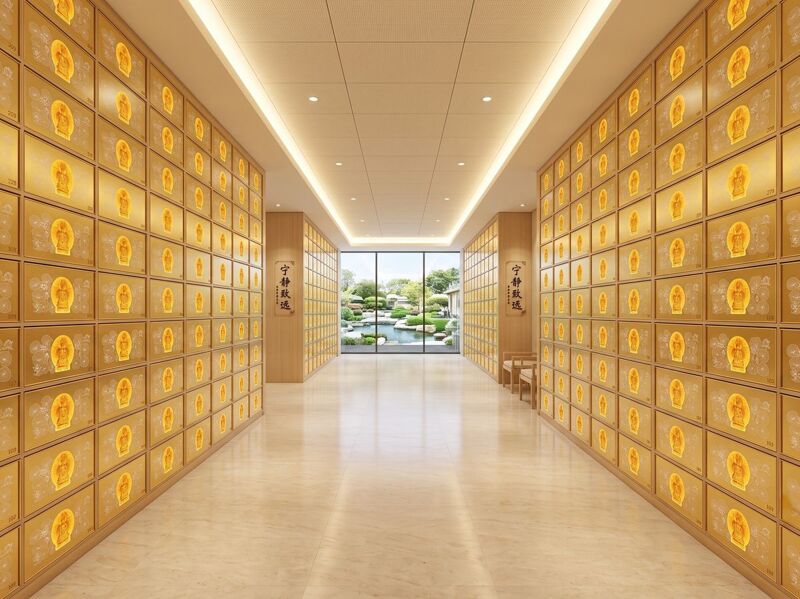
Use the same material for a 100 mm skirting or a 20 mm recessed shadow detail. The latter is more practical — no dust ledge, the mop passes in one stroke, and cleaning a columbarium becomes noticeably easier.
At the wall-floor junction, use a 20 mm cove or a matching edge trim. A square corner chips first, and once chipped the repair never matches in colour.
Homogeneous porcelain: 90–150 per m² for material, 60–80 for labour. Matte granite: 180–260 for material, 80–100 for labour (larger format needs machine laying).
On an 800 m² columbarium floor the difference between the two is roughly 80,000–100,000. That buys a longer service life; whether it is worth it depends on positioning — public columbaria should use granite, small private ones are well served by porcelain.
For a ground-floor or basement columbarium install a damp-proof layer (2 mm polyurethane or 0.4 mm PE membrane), or moisture rises and the stone effloresces.
Should there be underfloor heating? When a columbarium floor drops below 12 °C in winter, people feel distinctly cold. Underfloor heating costs about 150 per m² plus running cost. Recommended in the south; in the north with district heating it can be omitted.
Q: Can the floor have a pattern?
A: Yes, but keep it simple. For a columbarium, use only two tones within the same colour family as a guiding line.
Q: Can new tile go straight over an old floor?
A: Yes, but test the substrate for hollow spots first. If more than 5% is hollow, it must be removed and redone, or the new tile tents with it.
Q: What should the floor be cleaned with?
A: Neutral cleaner and a scrubber-dryer, once or twice a day. No strong acids or alkalis, and no steel wool.
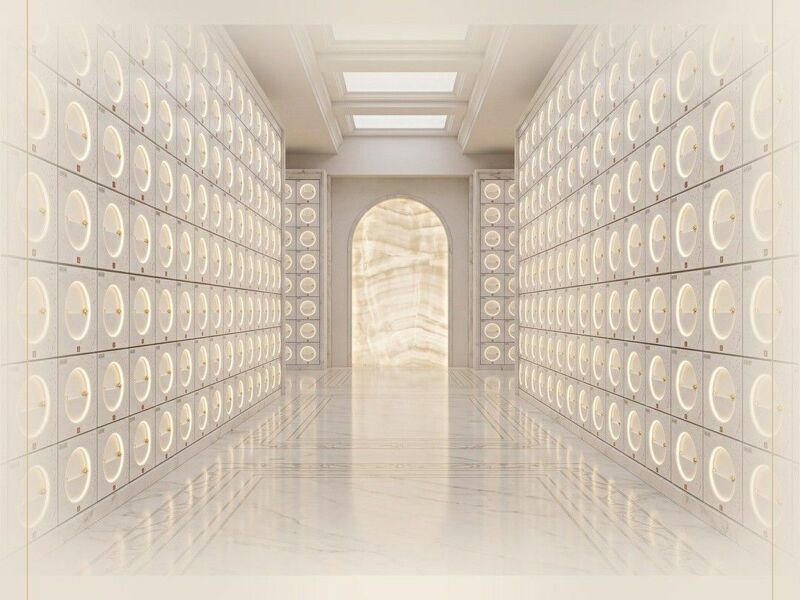
For a columbarium floor, only matte granite and homogeneous porcelain pass on all counts: R10, wet friction 0.5, Mohs 6, absorption below 0.5%, 600 square with 3 mm epoxy joints, fall 0.5–1%. A columbarium floor is walked on every day and hosed every day — getting it right is the least visible and most money-saving decision in the building.