
WeChat: (+86)13978873330 Email: 381784025@qq.com

WeChat: (+86)13978873330 Email: 381784025@qq.com

What families dread most on interment day is not an imperfect rite but a missing document or an hour lost. This breaks the day into six segments, minute by minute, with a list of what to bring.
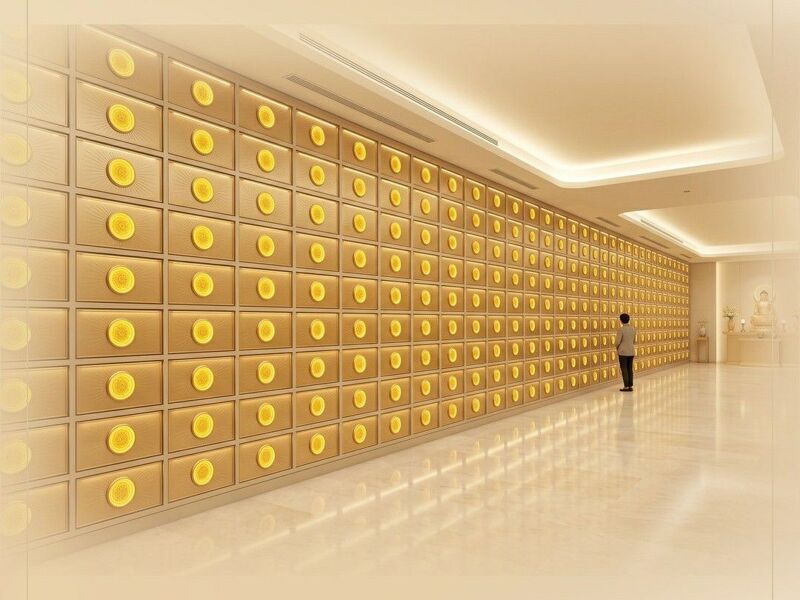
The cremation certificate (or relocation certificate), the applicant's identification, the niche use-right certificate, and the payment receipt.
The one most often forgotten is the last. Many halls' check-in desks will not open a niche unless management fees are shown as paid to the current year — the authority to open a niche is tied to payment status, not to sentiment.
One more thing to confirm: the name on the cremation certificate must match the registered name on the niche. One character apart — a variant form of the same character is enough — and the desk will require correction at the household registration office first, which costs half a day.
The desk does three things: verify documents, confirm the niche number issue a pass.
At the number check, read the zone, row and number on the screen yourself; do not simply listen to the staff member reading it aloud Columbarium numbering often runs two systems side by side — "East Zone" and "East Zone One" — which sound identical and are 60 m apart on foot.
Fifteen minutes is the smooth case. Around Qingming a 40-minute queue is normal, so book a slot before nine or after two.
In a mid-sized hall the walk from the lobby to the furthest zone is 80–120 m, through two doors and up a flight of stairs.
Carrying the urn: with the brocade box it weighs about 3–5 kg, and two people suffice — but over 100 m, four people rotating is better. The walkway before the niches is 1.2–1.5 m, so two people abreast carrying the urn fill it and a third can only follow behind.
With elderly visitors reckon on 40 m per minute; 100 m takes 2.5 minutes. Do not cut the timing fine.
Staff open the door with a master key, and the family can now see the cavity Check three things: whether the base panel carries dust or rust spots; whether the uprights have scratches from the previous family's urn; whether the gasket on the inside of the door has been compressed flat.
Raise anything you see on the spot; once the door closes it becomes "reported after the fact". A gasket compressed by more than 30% of its original thickness should be replaced, and writing that into the acceptance sheet works better than any verbal reminder.
Set the urn in, centred and towards the back, 20–30 mm from the rear panel, and at least 10 mm clear on each side. That 10 mm is not etiquette; it is room for fingers during handling.
Lay a 3 mm non-slip mat under the urn, to prevent sliding when the door is next opened.
The face of the urn towards the outside, square to the door. If the body carries carving on the front — a Buddha image, a sutra — and it is set facing the wrong way, every future opening will be awkward.

Sealing is closing, locking and applying the strip The strip carries the date, the niche number and the handler.
My advice: before sealing have every family member present put a hand on the urn lid and confirm it is theirs. It sounds superfluous, but it shuts out later doubt — the hardest disputes in a columbarium are not about money but about whether this was the right urn.
After sealing, the key stays with the hall; the family receives a certificate, not a key.
First, take the offerings away or sort them into the hall's bins; do not leave peel on the ledge. Second, confirm the start date of the management fee and the next payment date. Third, write the handler's name and staff number on the back of the certificate.
The third is most useful two years later — renewal, relocation and shared interment all require naming the handler.
Name mismatch: correct it first, no exceptions.
More than 30 minutes late: most halls push you to the next gap, which may not be that day.
The urn does not fit: a 210 mm urn in a niche with 200 mm clear width means the door will not close. No tool on site solves it; reschedule and change niche.
Q: Can we take photographs on the day?
A: Your own niche and your own family, yes; not other families' tablets and no flash. Most halls allow it; a few require prior notice.
Q: Must we observe an auspicious hour?
A: The hall only admits you within your booked slot; the hour is for the family to decide. Nine to eleven in the morning has the best light and the largest crowd.
Q: Can keepsakes be added after sealing?
A: No. Adding means going through relocation, which is reopening the niche.

Interment day runs 45–60 minutes across six segments: verify, check in, walk, open seat seal and leave. What decides whether it goes smoothly is not the rite but whether the four documents are complete, whether you read the number yourself, and whether you left that 10 mm. After the door seals, every adjustment becomes a relocation — which is why each earlier step deserves five extra minutes.






