
WeChat: (+86)13978873330 Email: 381784025@qq.com

WeChat: (+86)13978873330 Email: 381784025@qq.com

In the same columbarium hall niches in the first row inside the entrance often price 10 to 20 per cent below those in the second and third rows deeper in.
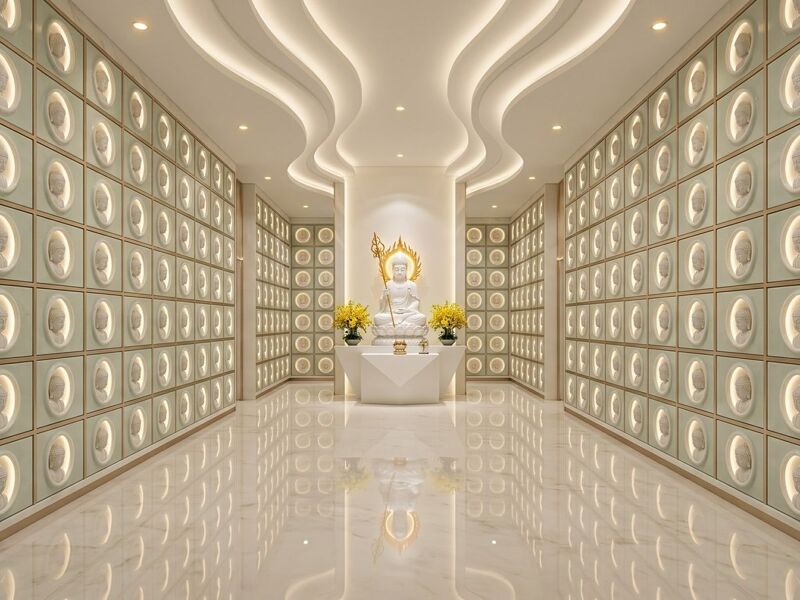
Many people cannot understand it: is the first row not the most convenient? Why cheaper?
The answer is four words: the draught position.
Through traffic. The first row faces the entrance, and everyone walks past it on the way in. During a visit there is always someone behind you, and kneeling and chanting get interrupted.
Direct airflow. When the door opens, outside wind moisture and heat hit the first row head-on. This is most obvious in the plum-rain season and in winter; the lower edge of first-row door panels is where water marks appear first.
Concentrated dust. Grit carried in on shoe soles, rainwater, paper scraps — all land on the first row first. However often it is cleaned, cleaning cannot keep up with footfall.
Those three together are why the first row is cheaper. The discount is justified.
No searching. You see it on entering. For elderly visitors especially, no long walk.
More space. The entrance zone is usually wider than an aisle, so first-row niches often have more standing room.
Shortest handling route. When an urn is brought in, the distance from vehicle to niche is minimal, reducing the risk of knocks.
Fastest exit in an emergency. When something happens you are out immediately.
So the first row suits two kinds of family: those with a mobility-impaired elder, or those whose visits are brief — incense and out.
Here is my method: spend the saving on fixing the first row's weak points.
How to fix them:
- Better door seals to reduce moisture carried in by airflow (tens of yuan) - A water bar along the lower edge of the door panel (under a hundred) - A movable mat in front of the niche to cut shoe-borne dust (under a hundred)
All three come to under three hundred yuan. If the first row is more than two thousand cheaper than the inner rows, the difference is net gain.
Conversely, if it is only three to five hundred cheaper, it is not worth tolerating the traffic and airflow.
Distinguish two kinds of first row.
True first row: directly facing the main door, nothing in between.
False first row: you pass through a lobby, a screen or a turn in the entrance hall before reaching it. Such a niche is not actually in the direct airflow path, and foot traffic is far lighter.
When viewing always walk the route: come in the main door and take the shortest path — does it pass in front of the target niche? If yes, it is a true first row. If not, it is a false first row and can be negotiated as an ordinary position.

Some halls turn the entrance — you face a wall or a small shrine recess first, then turn left into the niche area. That design converts the first row from a draught position into a focal position.
A focal niche has entirely different value: quiet, with a visual anchor, unaffected by through draughts, often priced above ordinary niches.
So before judging the first row check whether the entrance turns. With a turn, the first row may be a good niche. Without one, the first row is a corridor.
Stand for three minutes. Stand in front of the first-row niche, keep still for three minutes, and count how many people pass behind you.
Touch the lower edge. Run a hand along the bottom of the door panel and the shelf Any water marks, any dust buildup?
Look at the entrance mat. The dirtier and wetter the mat, the more grit and water is being carried in, and the more the first row is affected.
Q: Can a first-row niche be bought?
Yes, provided the discount is adequate and sealing and water deflection are done. For families with frequent elderly visitors, the convenience is a real advantage.
Q: Is the first row damper?
Where doors open frequently and there is no buffer lobby, yes. With a double-door arrangement or an entrance turn, the difference is small.
Q: Will a first-row niche resell easily?
Buyers will discount it for the same reason you did.
Q: What about a first row near the entrance but not facing the door?
That is a good niche. It avoids the draught while keeping the short route.
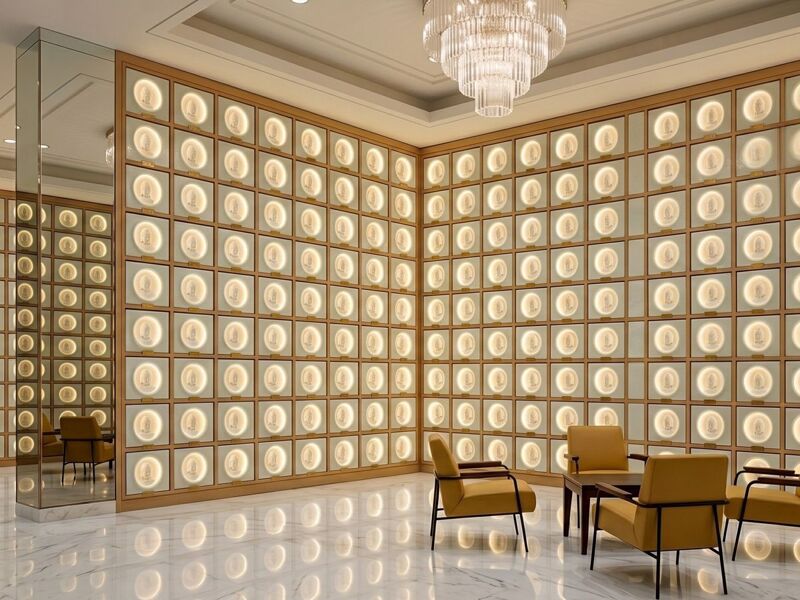
The first row inside the door is cheap not because the facility is generous but because the position's weaknesses are priced in. Whether to buy comes down to two things: whether the discount covers the cost of fixing those weaknesses, and whether your family genuinely needs "arrive and you are there". There is no absolutely good niche, only a position that matches how you commemorate.






